“There is surely nothing quite so useless as doing with great efficiency what should not be done at all.”
This observation by renowned management thinker, Peter F. Drucker, in his 1963 Harvard Business Review article, Managing for Business Effectiveness, captures a fundamental challenge in organisational performance: the need to understand how work is done before attempting to improve it. As organisations increasingly embrace digital transformation and Artificial Intelligence (AI), this understanding has become even more critical.
Against this backdrop, the Faculty of Computing and Informatics, University of Lagos (UNILAG), hosted a Process Intelligence Webinar on Wednesday, November 18, 2026, bringing together academics and industry experts to examine how Process Intelligence can help organisations gain deeper insights into their operations, improve efficiency, strengthen decision-making and maximise the value of AI.
The webinar featured two industry and research practitioners: Dr. Niyi Ogunbiyi, a Process Mining Researcher, and Phiwi Ntsada, Founder of Process Intelligence Africa. The session was moderated by Dr. Babatunde Sawyerr, Associate Professor of Artificial Intelligence and Optimisation, UNILAG, while the Dean of the Faculty, Professor Adewole Philip Adewole, delivered the welcome address.

In his opening remarks, Professor Adewole described Process Intelligence as an emerging area of computing that is transforming how organisations understand, manage and improve their operations. He explained that the discipline integrates data analytics, process mining, artificial intelligence, machine learning and automation to provide deeper insights into organisational processes.
He emphasised that the value of organisational data lies not merely in its collection and storage but in the ability to analyse it, derive meaningful insights and translate those insights into improved decisions and performance.
Highlighting its relevance to higher education, the Dean identified opportunities for leveraging Process Intelligence to improve administrative operations, teaching and learning management, research administration and institutional decision-making. He also reaffirmed the Faculty’s commitment to exposing staff and students to emerging technologies and practices shaping the digital economy.
Understanding the Power of Process Intelligence
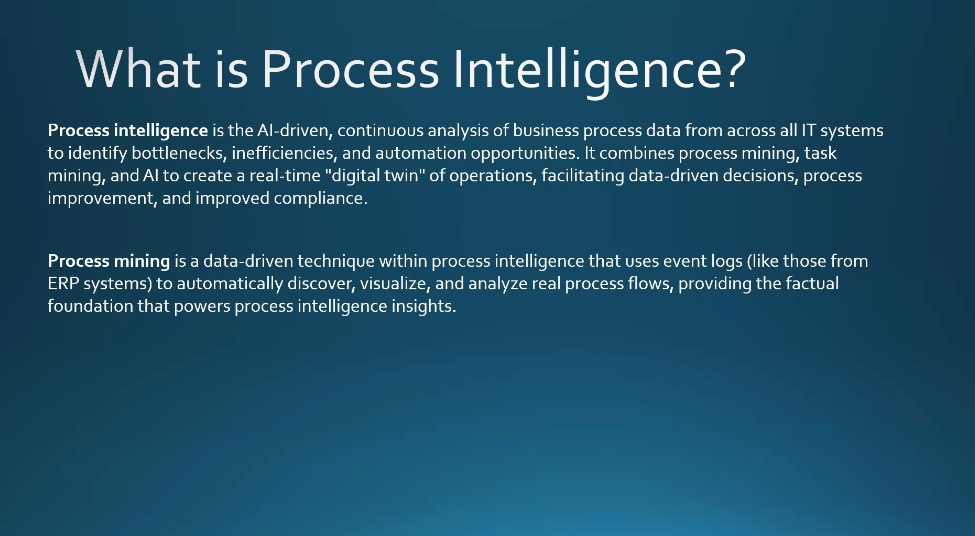
Delivering the first presentation, titled “An Introduction to Process Intelligence and Why It Matters”, Dr. Niyi Ogunbiyi described Process Intelligence as the continuous, AI-enabled analysis of business processes using data generated from operational and information technology systems.

He explained that Process Intelligence brings together disciplines such as Process Mining and Task Mining, supported by Artificial Intelligence, to create a digital representation of how work is actually performed within an organisation.
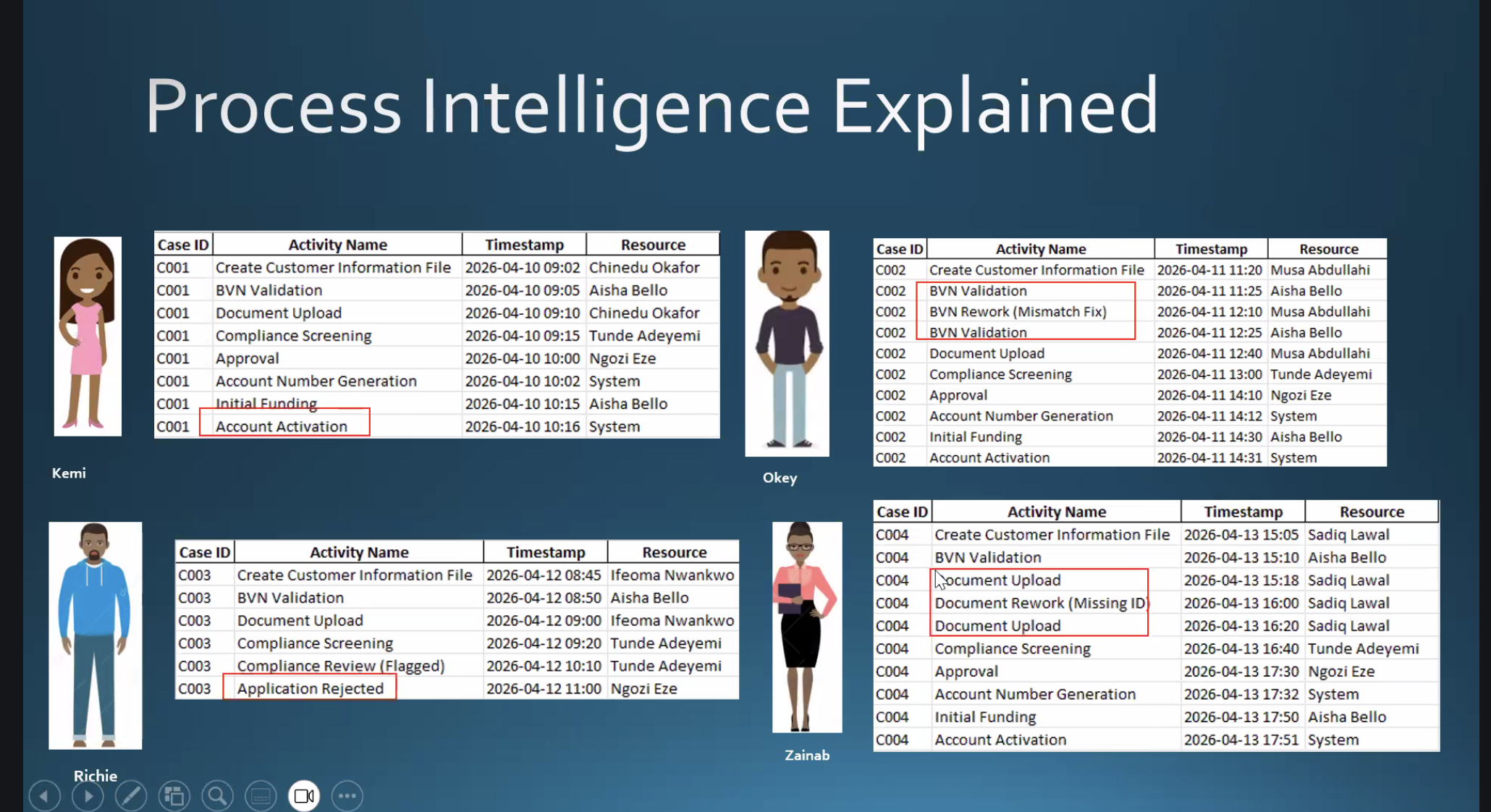
Using a practical bank account-opening scenario involving different customers, he demonstrated how digital records could reveal the activities undertaken at each stage of a process, the personnel involved, the time taken and the eventual outcome.
The illustration showed how Process Intelligence can identify process variations, unnecessary delays, repeated activities, missing documentation and compliance failures. While one customer’s account-opening process might be completed seamlessly, another could experience delays arising from incomplete documentation or repeated verification, while a third might have an application rejected following a compliance review.
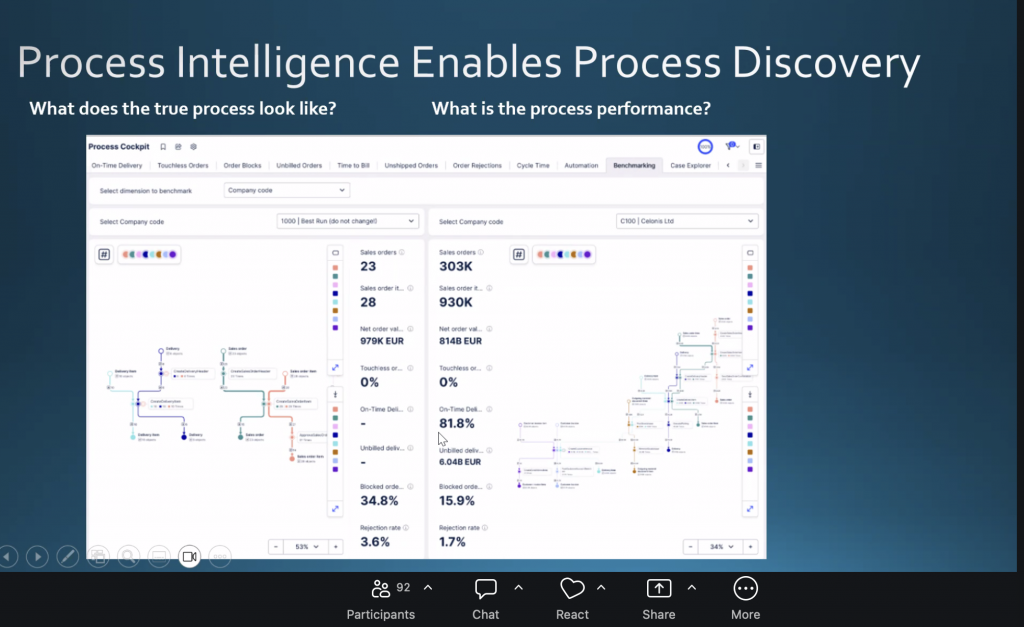
Dr. Ogunbiyi explained that analysing such records across thousands of transactions enables organisations to identify recurring bottlenecks, determine average processing times and understand where operational inefficiencies occur.
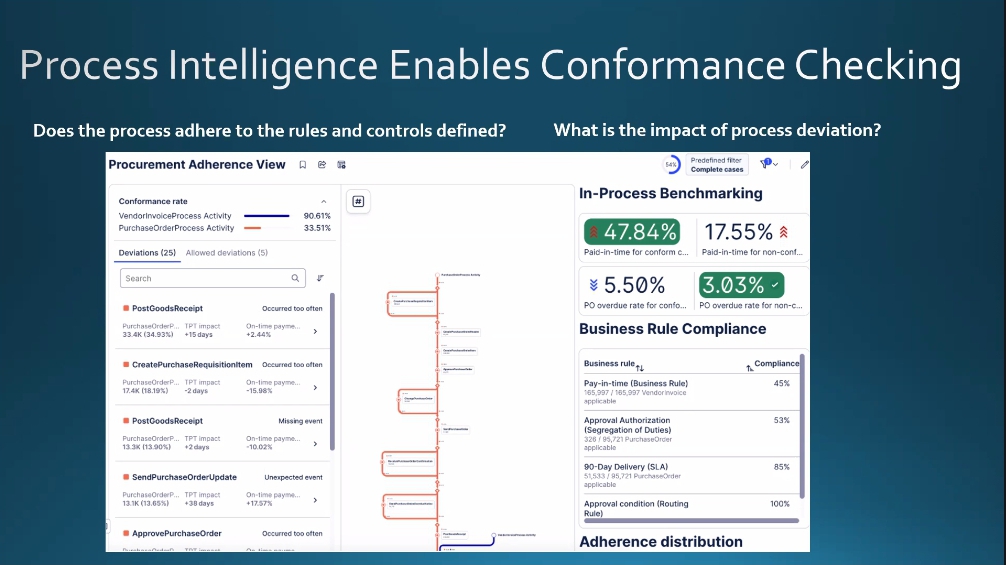
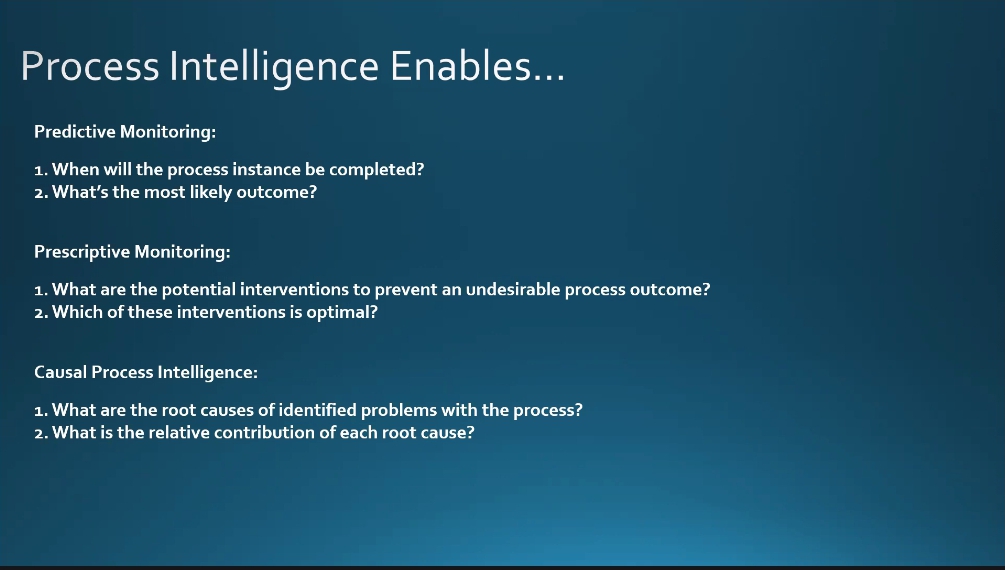
He highlighted four important capabilities of Process Intelligence: process discovery, which reveals how processes actually operate; process compliance, which identifies deviations from established rules and controls; predictive monitoring, which anticipates potential delays or undesirable outcomes; and prescriptive monitoring, which recommends interventions to achieve better results.
He also discussed causal process analysis, which enables organisations to move beyond identifying symptoms to understanding the underlying factors responsible for operational problems.
On the relationship between Process Intelligence and Artificial Intelligence, Dr. Ogunbiyi emphasised that AI requires organisational context to produce relevant and reliable results. While AI can generate predictions and recommendations, Process Intelligence provides insights into an organisation’s actual processes, policies and operational realities, helping to make those outputs more meaningful.
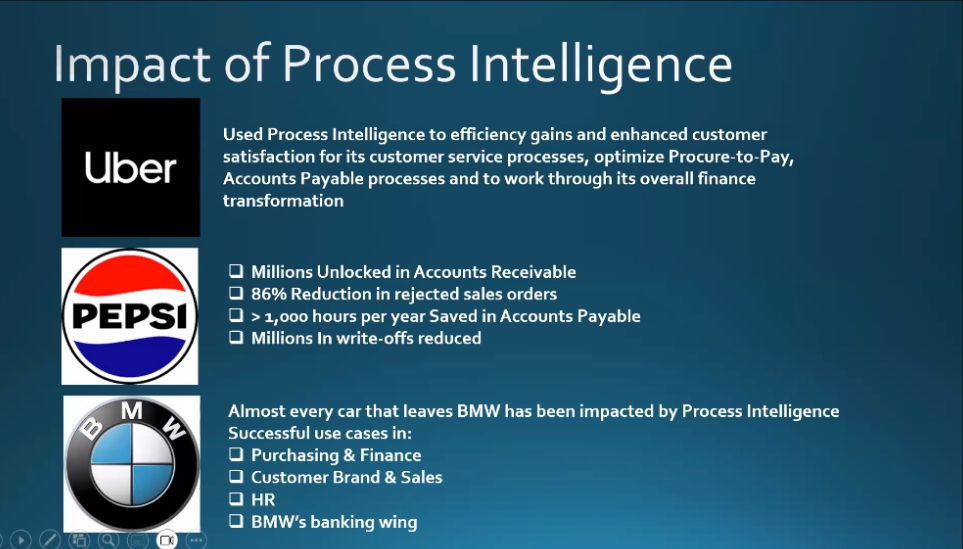
Citing examples of organisations that have adopted Process Intelligence, he referenced Pepsi, which reportedly achieved an 86 per cent reduction in rejected sales orders and saved more than 1,000 hours in its accounts payable process. He also highlighted BMW’s integration of Process Intelligence into its manufacturing operations.
Bringing Process Intelligence Closer to Africa
The second presentation, delivered by Phiwi Ntsada, Senior AI Process Consultant at Riverty and Founder of Process Intelligence Africa, explored the practical applications of Process Intelligence, its emerging career opportunities and the importance of developing expertise within the African continent.
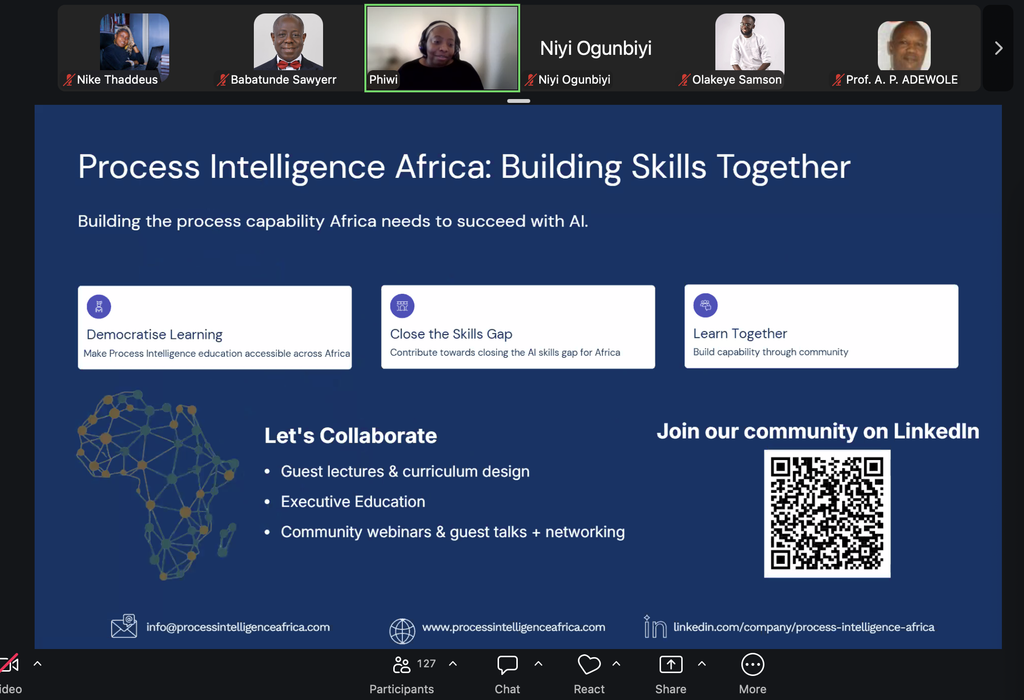
Drawing on more than 16 years of industry experience across Zimbabwe, South Africa and Germany, Ntsada shared her professional journey in business process management and process improvement. She explained that her exposure to Process Mining and Process Intelligence in Europe inspired her to establish Process Intelligence Africa as a platform for raising awareness, encouraging knowledge-sharing and expanding learning opportunities across the continent.

She observed that African representation at international Process Intelligence conferences and professional gatherings remained limited. This gap informed her decision to establish a community where practitioners, researchers, students and industry professionals could connect, exchange ideas and learn from one another.
Established in January 2026, Process Intelligence Africa provides access to learning resources, industry experiences and regular webinars, while encouraging the integration of Process Intelligence education and research into African universities.
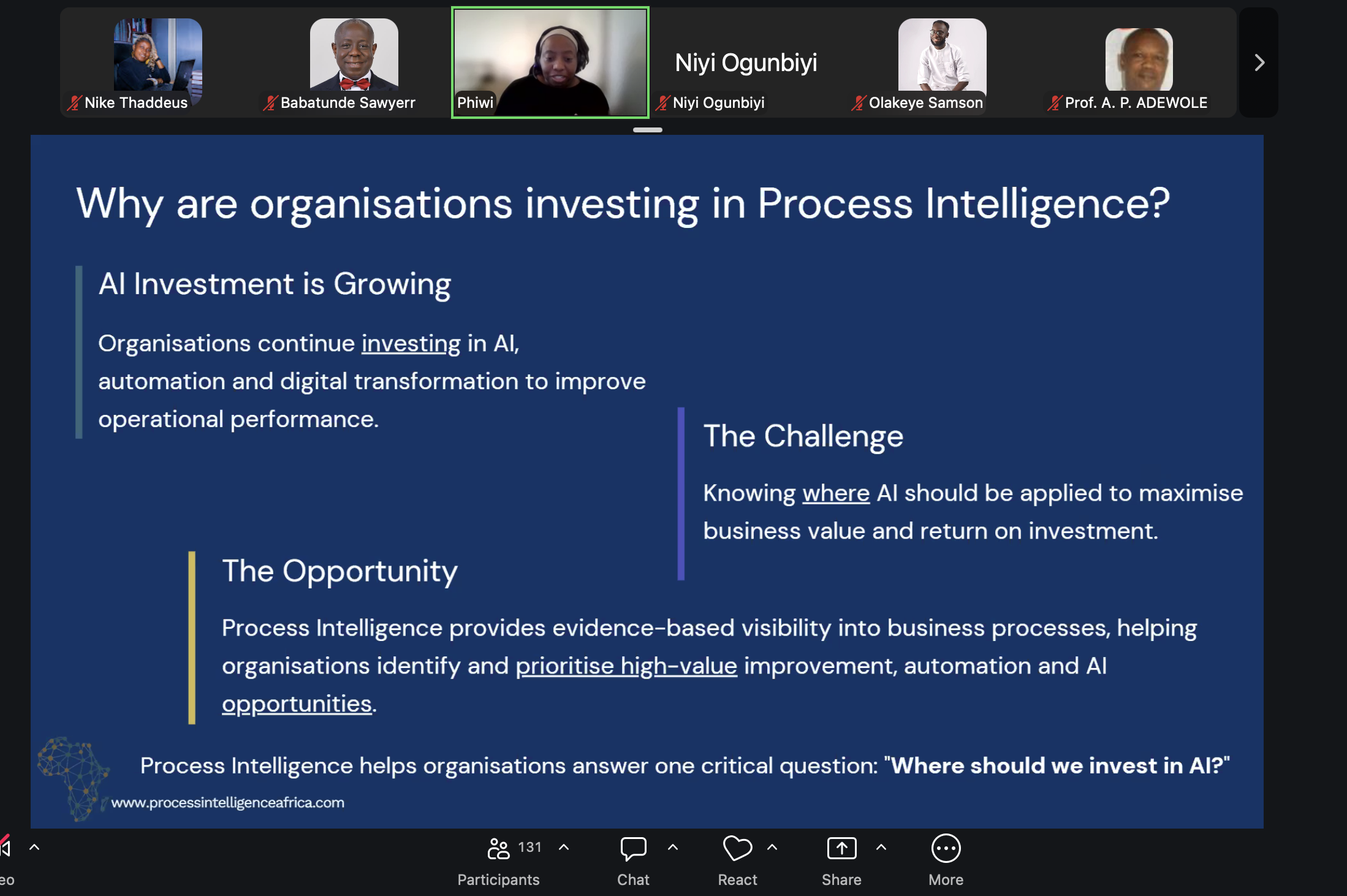
A significant aspect of her presentation focused on the role of Process Intelligence in helping organisations make informed decisions about their investments in Artificial Intelligence.
She noted that although many organisations were allocating substantial budgets to AI, some were yet to achieve the expected returns because they had not adequately examined the processes into which the technology was being introduced.
According to her, Process Intelligence provides an evidence-based understanding of existing operations, helping organisations identify areas requiring improvement and determine where AI investments are most likely to deliver measurable value.
She stressed that organisations should first understand and, where necessary, redesign their workflows before deploying AI solutions, rather than simply introducing new technology into existing processes that may already be inefficient.
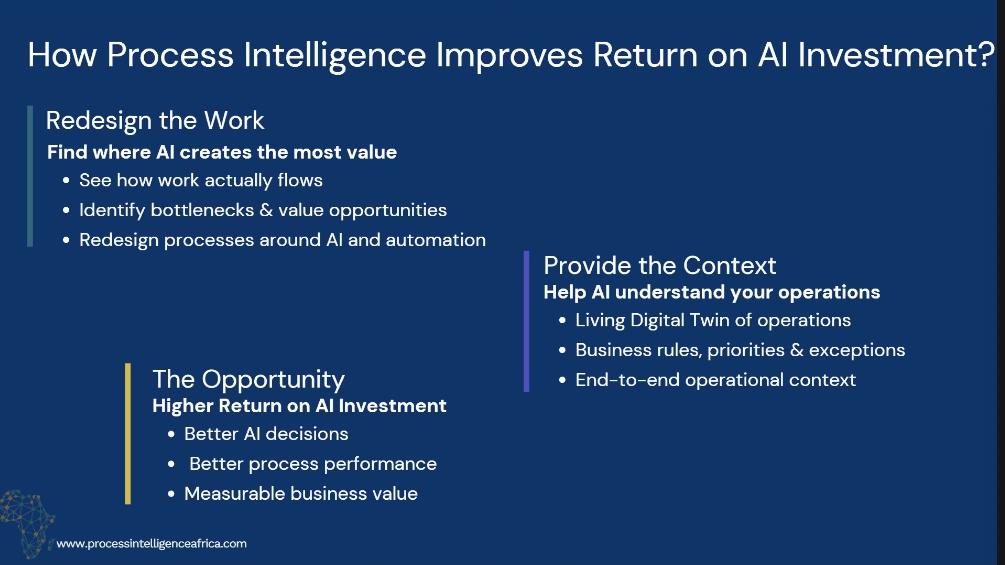
Explaining the concept of a living digital twin of organisational operations, Ntsada noted that Process Intelligence creates a digital representation of how work flows across an organisation. This enables decision-makers to examine actual operational activities, identify areas requiring improvement and provide AI systems with the organisational context needed to generate more accurate and relevant outputs.
She cited research findings attributed to Deloitte and McKinsey, which highlight workflow redesign as an important factor distinguishing organisations achieving stronger results from their AI investments.
Ntsada also highlighted organisations across Africa already deploying Process Intelligence, particularly in telecommunications, insurance, mining and banking. These include MTN, Old Mutual, AngloGold Ashanti, Standard Bank and Nedbank.
On career opportunities, she explained that the field accommodates professionals from both technical and non-technical backgrounds, with opportunities in data engineering, data analytics, process consulting, value engineering, research and academia.
Sharing insights from her professional experience, she described how specialists collaborate to connect organisational data, develop analytical dashboards, interpret findings, recommend improvements and support the adoption of Process Intelligence tools across business units.
She further disclosed that her current responsibilities at Riverty involve advising organisational units on proposed AI investments, assessing the readiness of their processes for AI deployment and ensuring that proposed initiatives can deliver meaningful returns.
Addressing Trust, Infrastructure and the African Context
The interactive question-and-answer session provided participants with an opportunity to explore practical considerations surrounding the adoption of Process Intelligence.
Responding to a question about trust and potential employee resistance, Ntsada identified data availability and organisational change management as significant considerations, particularly in African business environments where many operational activities are not yet fully digitised.
She explained that Process Intelligence tools work most effectively with digital records but noted that emerging Task Mining capabilities can help capture activities outside conventional information systems, including work conducted through emails and other manual channels.
On data security, she explained that organisations could consider different deployment options, including on-premises solutions, depending on their regulatory requirements and data protection needs.
She also acknowledged that employees might initially perceive process monitoring as an attempt to scrutinise individual performance. However, she stressed the importance of awareness creation, effective communication and management support in helping staff understand that the objective is to improve workflows and make their work easier, rather than judge or penalise them.
Other questions addressed the distinction between Process Intelligence, traditional Business Intelligence and Business Process Management, as well as the relationship between Process Intelligence and Artificial Intelligence.
Dr. Ogunbiyi clarified that Process Intelligence is not a subset of AI. Rather, the two are complementary disciplines, with Process Intelligence providing insights into how work is performed and AI supporting capabilities such as prediction, recommendation and causal analysis.
He also explained that the performance indicators used to measure the value of Process Intelligence-enabled AI investments vary across industries. While healthcare organisations may track improvements in patient outcomes, financial institutions may focus on risk reduction, fewer delayed transactions and operational efficiency.
Further discussions examined how Process Intelligence can improve the reliability of AI-generated outputs by grounding large language models in an organisation’s actual processes, internal policies and operational data, thereby reducing inaccurate or irrelevant responses.
Building Africa’s Process Intelligence Ecosystem
In his closing reflections, Dr. Babatunde Sawyerr, who coordinated the webinar, distilled a central message from the presentations: organisations cannot effectively transform what they do not understand.
He observed that Process Intelligence provides an opportunity to move beyond assumptions about organisational operations towards evidence-based understanding, improved decision-making and continuous improvement.
He emphasised that, for Africa, adopting Process Intelligence should go beyond embracing another technology. It should also involve building knowledge, developing local expertise, strengthening universities and empowering professionals to create more efficient, transparent and competitive organisations.
He challenged universities, industry practitioners, government and individual professionals to contribute to developing the emerging ecosystem, particularly by preparing young Africans to participate meaningfully in the field through teaching, research and practical exposure.
Addressing concerns about infrastructural limitations, including inconsistent electricity supply, Dr. Ogunbiyi acknowledged the need for solutions adapted to African realities. He expressed optimism about the increasing efficiency of emerging algorithms and the capacity of African innovators to develop context-specific solutions.
The webinar reinforced the importance of understanding organisational processes as a foundation for meaningful digital transformation. It also highlighted opportunities for African universities and professionals to contribute to an emerging field with applications across virtually every sector of the economy.
For the University of Lagos, the engagement provided a valuable platform for connecting academic inquiry with industry experience while exposing participants to an evolving discipline at the intersection of computing, data analytics, process improvement and Artificial Intelligence. It further underscored the Faculty’s role in stimulating conversations, building capacity and preparing students and professionals for the opportunities and challenges of an increasingly AI-driven world.
Author: Nike Ogunshakin