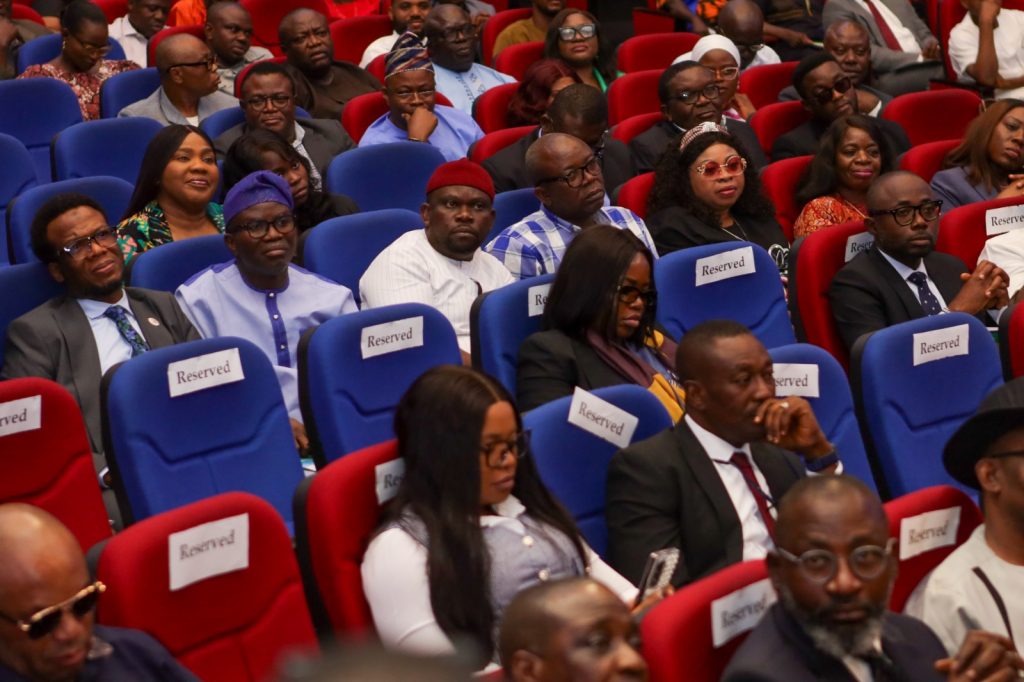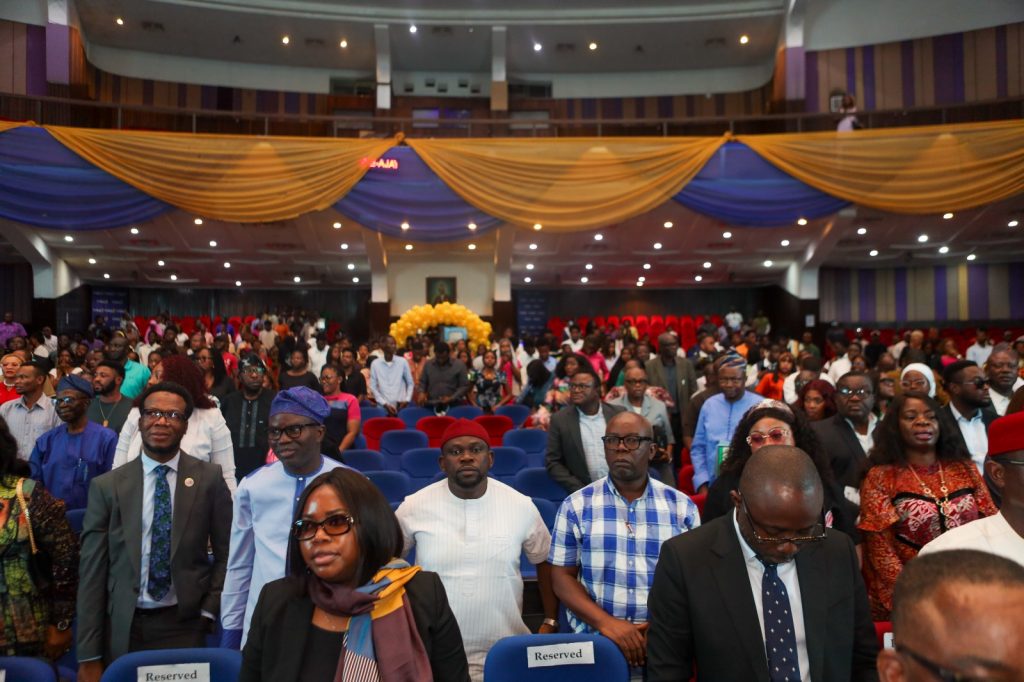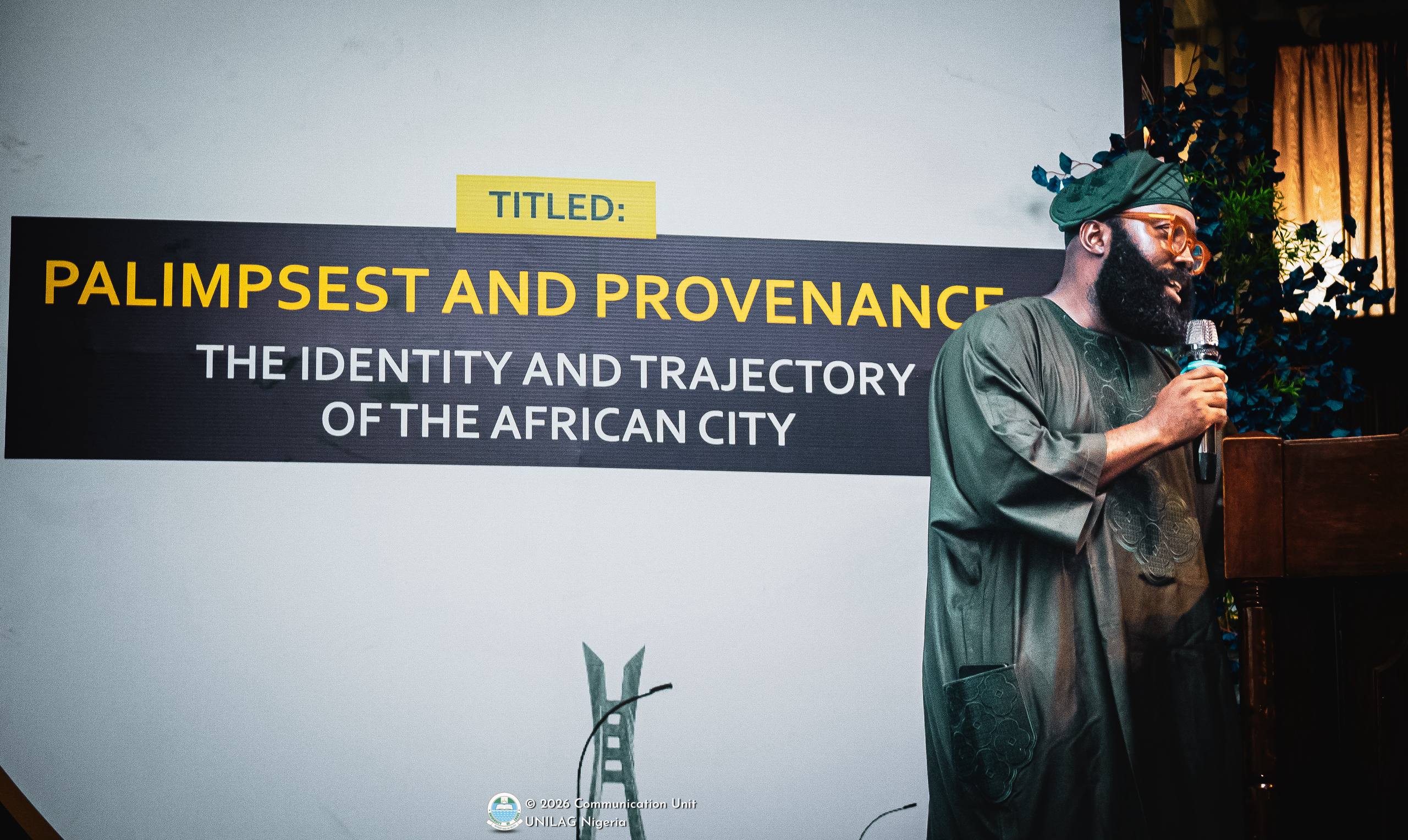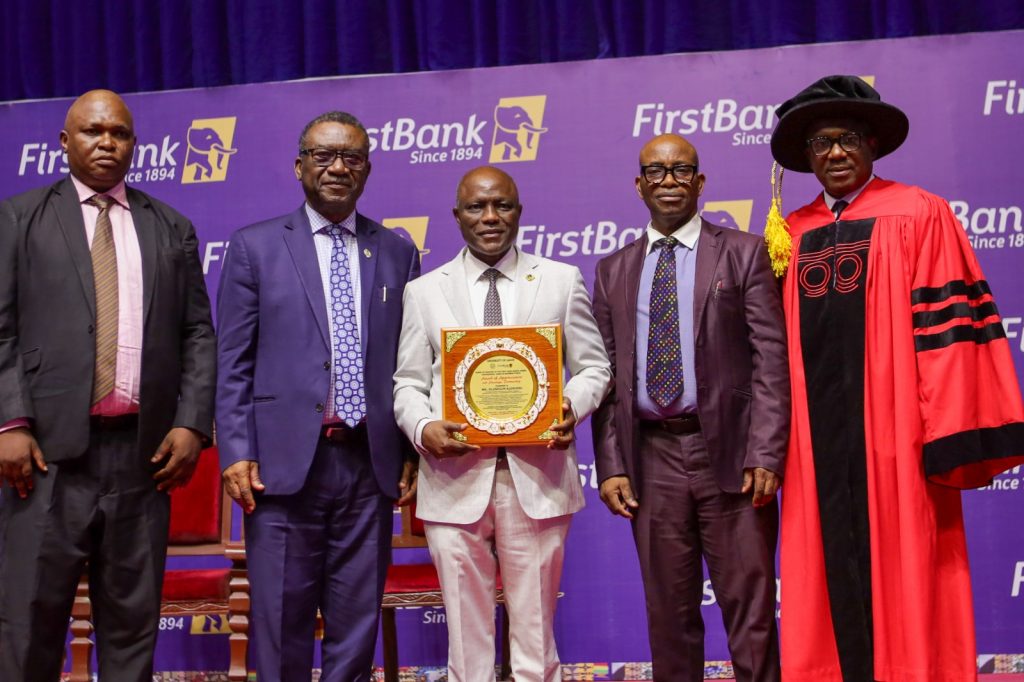
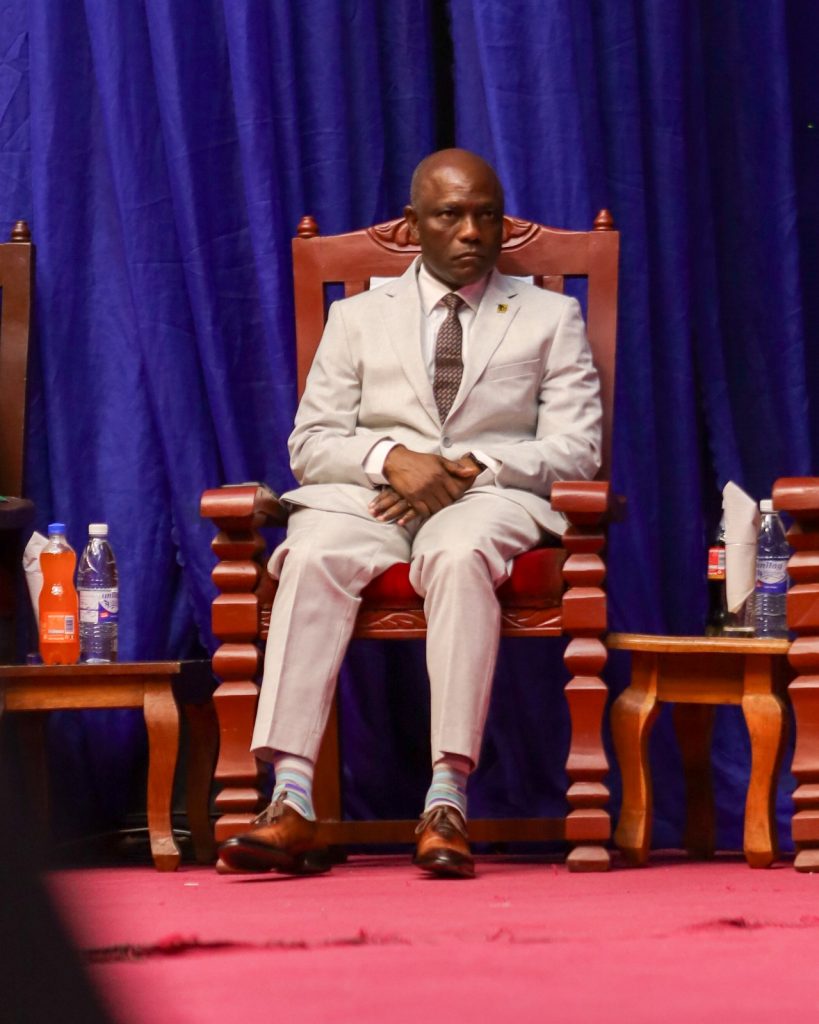
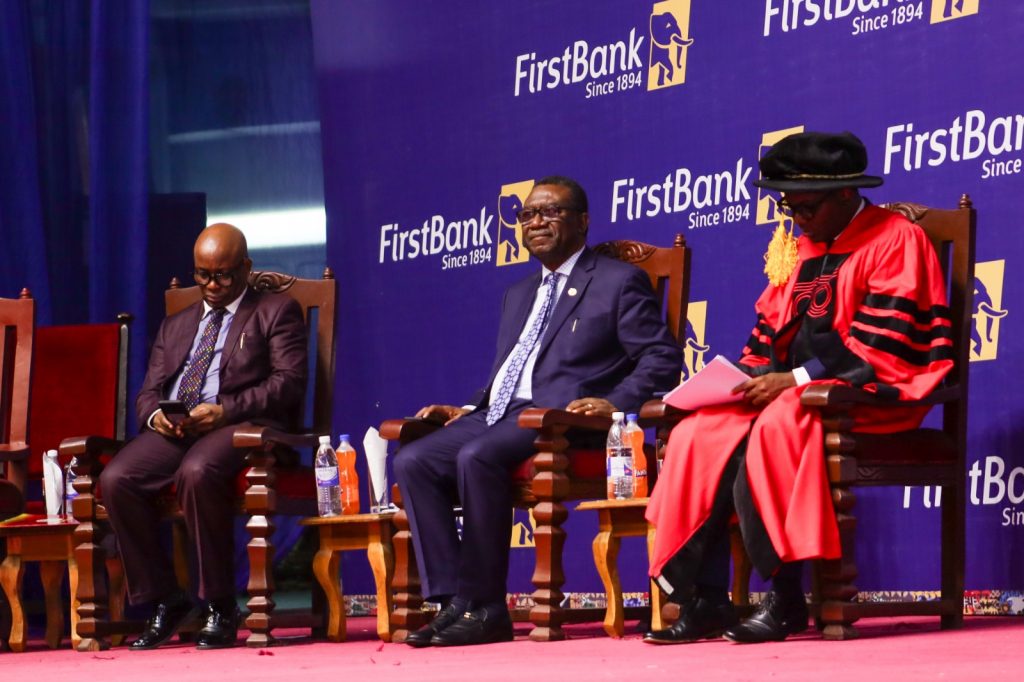
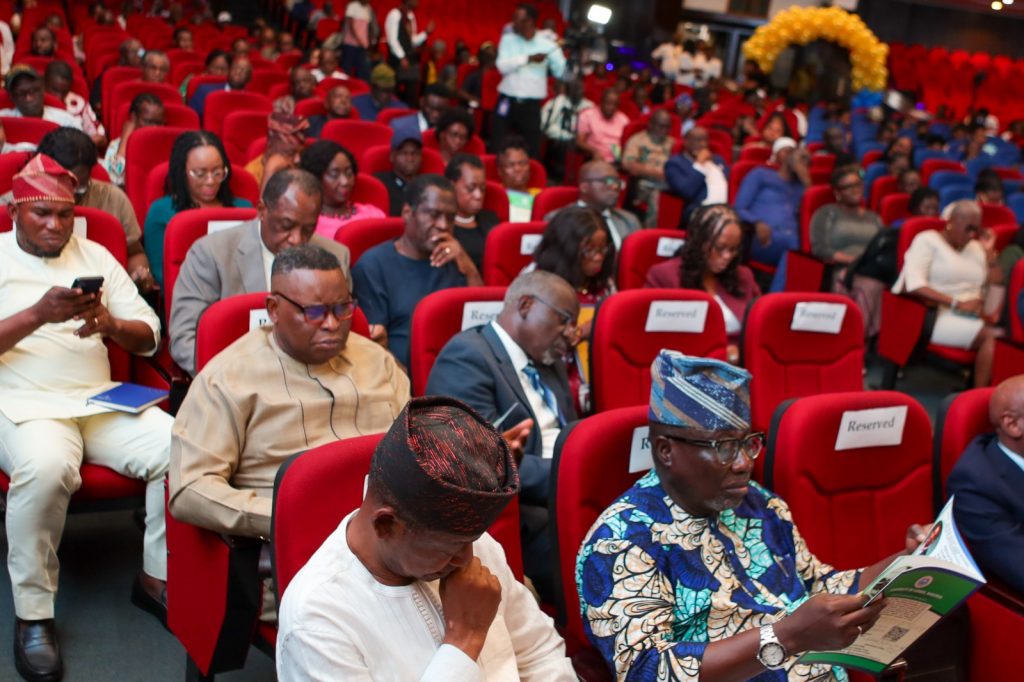
The University of Lagos (UNILAG) and First Bank of Nigeria Limited on Thursday, September 3, 2026, hosted the Inaugural Public Lecture of the First Bank Samuel Asabia Professorial Chair in Business Ethics at the J.F. Ade Ajayi (Main) Auditorium, UNILAG. The event marked the formal reactivation of the Chair after more than three decades of dormancy.
The lecture, themed “ Ethical Paradoxes, Small Businesses, and the Informal Economy: Lessons for Tax Compliance and Accountability ,” brought together the University’s management, First Bank leadership, government representatives, academics, students, and members of the press.
Restoring a Three-Decade Legacy
The Chair was originally established on February 4, 1994, with a ₦5 million endowment to honor Chief Dr. Samuel Oyewole Asabia, OFR, First Bank’s first Nigerian Managing Director and Chief Executive, renowned for his uncompromising business ethics.
The turning point arrived when the reconstituted Board of Trustees, chaired by Distinguished Professor Akin Osibogun, restructured the position to attract top-tier global talent. This initiative successfully secured Professor Kenneth Amaeshi to occupy the Chair in 2025.
In her opening address as chief host, delivered by the Deputy Vice-Chancellor (Academic and Research), Professor Matthew Olusoji Ilori, the Vice-Chancellor, Professor Folasade T. Ogunsola, OON, FAS, emphasized the broader mission of academic chairs.
She asserted that a Professorial Chair should be more than a title attached to an endowment, a centre of intellectual leadership where scholarship speaks to society, research informs practice, and the University engages courageously with the difficult questions of its time.
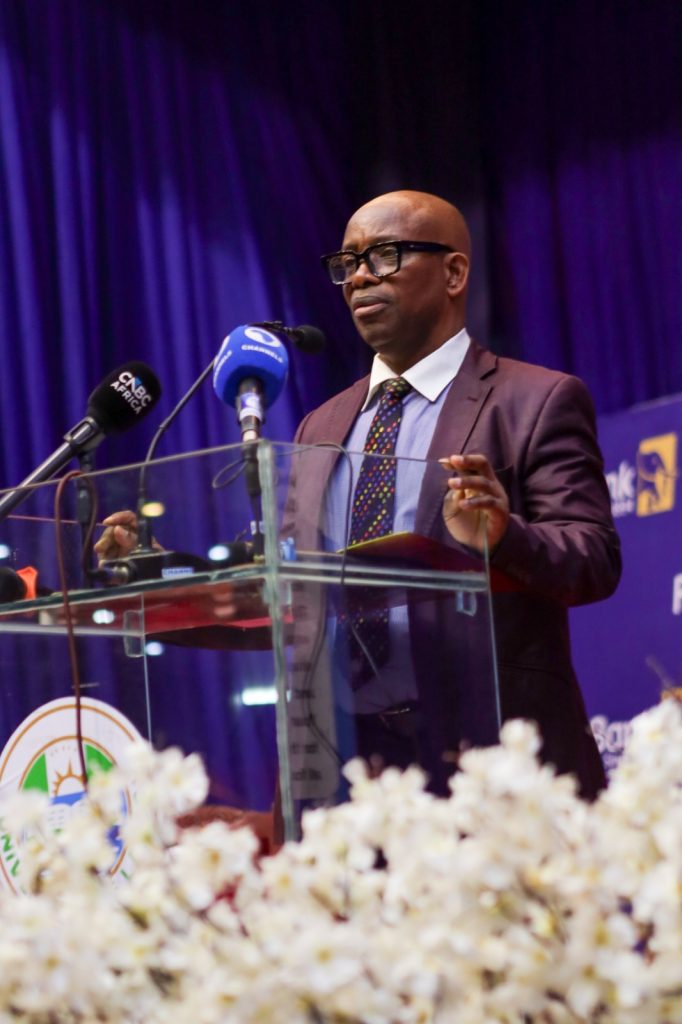
She commended First Bank for the foresight that established the Chair and for sustaining the partnership across more than three decades.
Earlier, the Chairman of the Board of Trustees, Distinguished Professor Akin Osibogun, described the Board’s task as one greater than administering an endowment. In his words, “We had been entrusted with restoring a promise” recalling how the reconstituted Board returned to the Chair’s founding objectives and resolved to move it “from dormancy to activity.”
First Bank Re-affirms Commitment to Ethics and Education
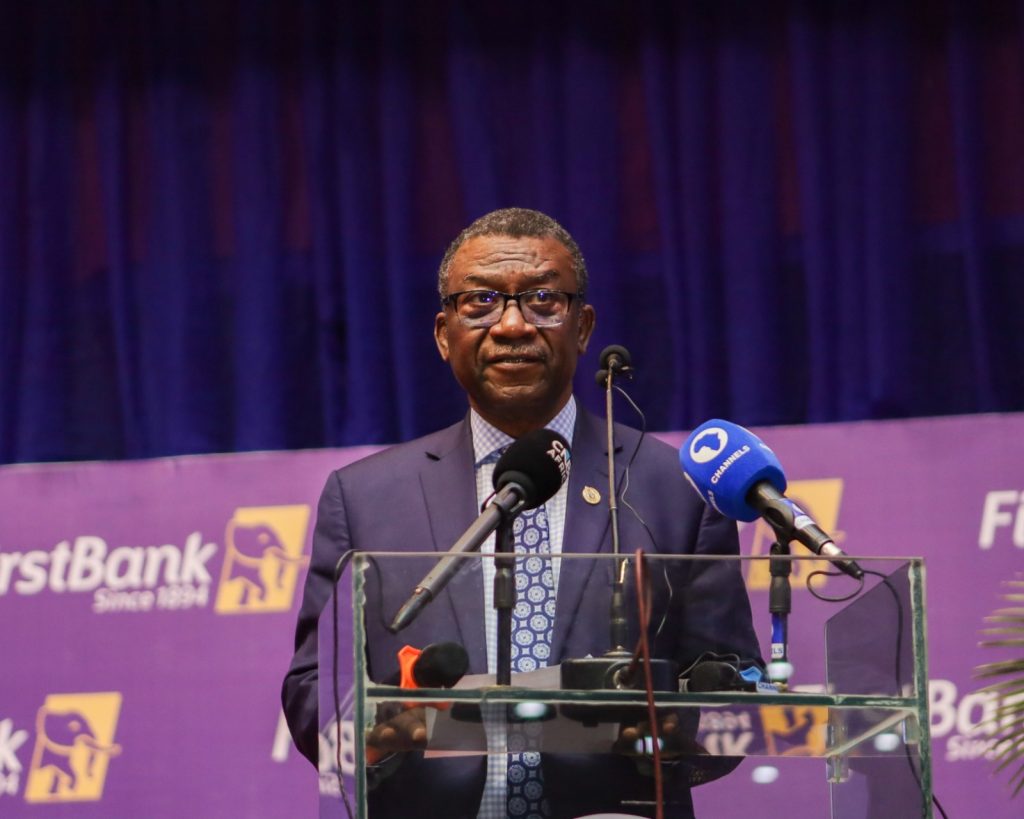
The Chairman of the occasion and Managing Director/CEO of First Bank, Mr. Olusegun Alebiosu, was warmly received by the assembly. Reflecting on his student days at Akoka, the proud alumnus paid tribute to past mentors, including Professor Sola Fajana, and shared insights on ethical enterprise.
“Business is actually more than making money. Business is about making a profit while providing quality service,” Mr. Alebiosu remarked, detailing First Bank’s investments in educational development and financial literacy initiatives.
To further commemorate the occasion, he listed First Bank’s wider investment in ethics and education, including its Educational Infrastructure Development Programme, the Future First financial literacy initiative which has reached over 85,000 secondary school students since inception and its sponsorship of the CFA Society Nigerian Universities Ethics Challenge.
Ethics, Tax Morale and the Informal Economy
Delivering his first public lecture in Nigeria following a distinguished international career spanning the University of Edinburgh, the European University Institute, and the University of Warwick, Professor Kenneth Amaeshi framed his analysis through a vivid personal experience from 2007.
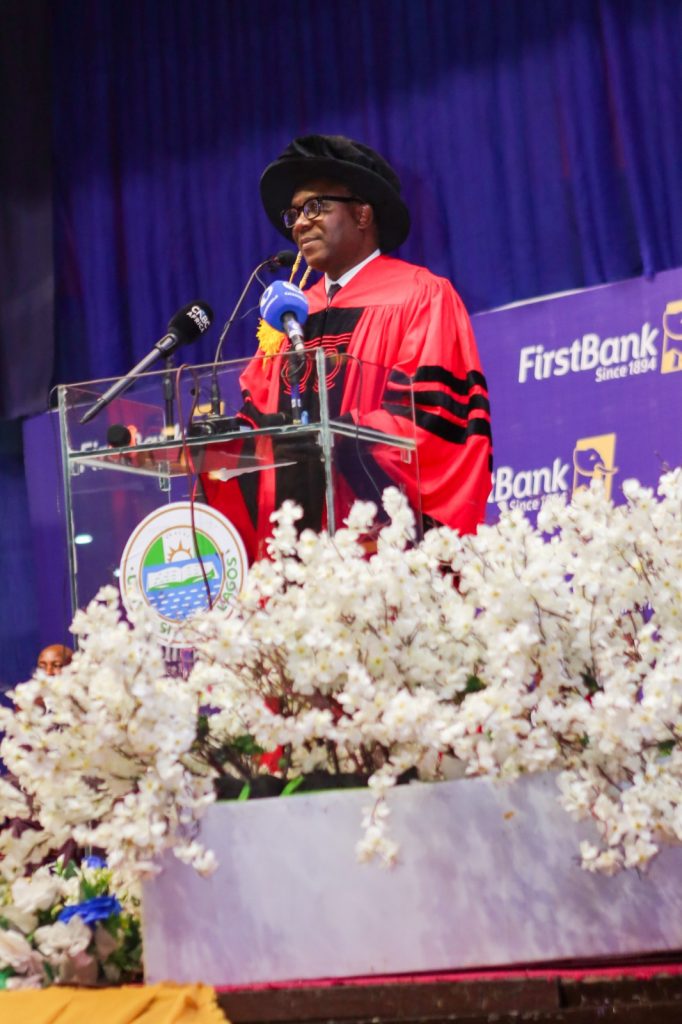
Professor Amaeshi opened his lecture with a 2007 personal account of being detained in Lagos when his airport taxi was stopped for a minor traffic infraction. What began as a ₦1,000 fine turned into a five-hour delay and a ₦20,000 extortion demand backed by a fake receipt. He used this encounter to illustrate how deceit and institutional corruption destroy public trust, making it a central theme of his address.
Tracing his intellectual journey from post-civil war rural Eastern Nigeria to corporate consulting in Lagos, Professor Amaeshi highlighted a sharp disconnect between imported Western theories and local economic realities. He argued that economic frameworks are socially constructed rather than universally fixed, championing Africapitalism to ground corporate purpose in African values. Ultimately, he emphasized that sustainable economic growth relies on aligning enterprise practices with communal culture and local context.
Turning to the national economy, Professor Amaeshi highlighted the vast footprint of Nigeria’s “invisible economy.” He pointed out that while the formal banking sector directly employs fewer than 600,000 individuals out of a population exceeding 200 million, the informal sector forms the nation’s true majority economy. From market women to artisans across cities like Lagos, Kano, Maiduguri, and Jos, this micro-enterprise network quietly sustains the vast majority of livelihoods across the country.
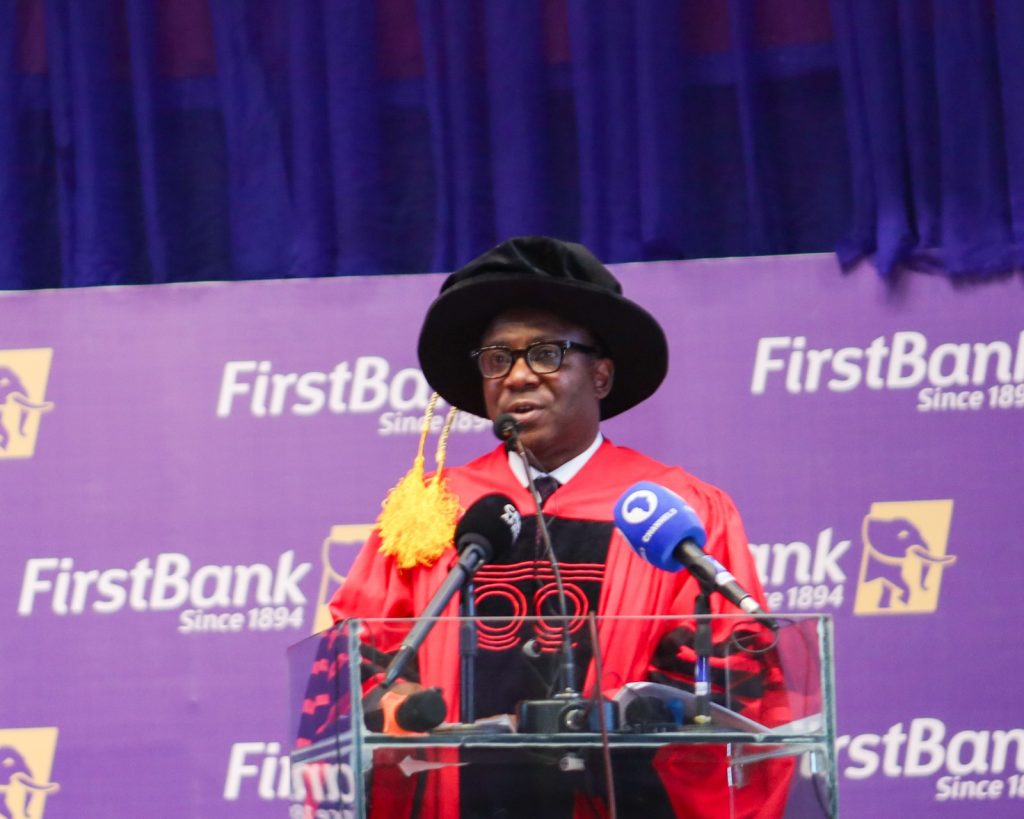
Addressing fiscal governance, Professor Amaeshi examined the tension between corporate profit motives and public revenue needs through global practices like “strategic regulatory arbitrage.” He contrasted Google’s strict adherence to tax technicalities with Facebook’s voluntary structural adjustments in the UK to illustrate the power of public dialogue. Emphasizing that corporate social responsibility must complement statutory regulation, he concluded that Nigeria suffers not from a shortage of laws, but from a deficit in implementation.
Challenging the popular narrative, Professor Amaeshi explained that citizens withhold taxes not out of hostility, but as a silent protest against systemic opacity. His empirical research divides taxpayers into those driven by unconditional civic duty and those who demand visible public value before contributing. He insisted that rebuilding civic trust requires urgent legal and structural overhauls.
To bridge this gap, Professor Amaeshi proposed establishing Tax Accountability Desks under the Office of the Tax Ombud to openly detail how revenues are spent.
He also urged tying annual tax collections directly to Sustainable Development Goals like Zero Hunger, giving taxpayers a clear way to track their money’s impact. Drawing on Scandinavian models built on deep mutual trust, he called on corporate elites to lead this cultural shift, reminding the audience that “he who comes to equity must come with clean hands.”
Award and Gift Presentation
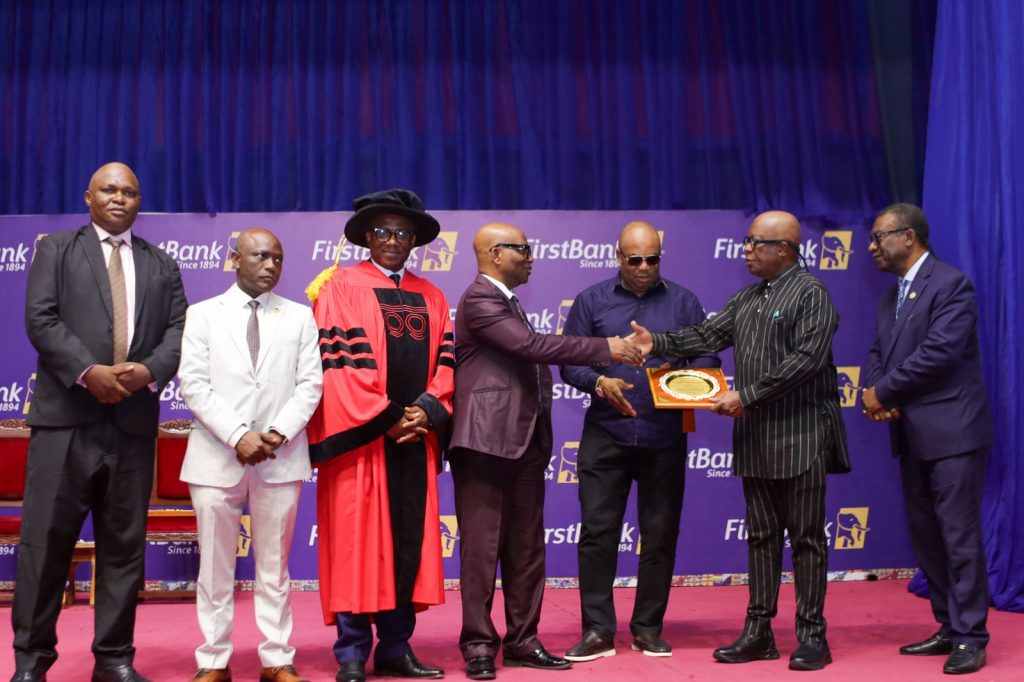
Following the public lecture, the Director of the Office of Advancement, Dr. Taiwo Folasade Ipaye, FNIM, led a special recognition session to honour key stakeholders, dignitaries, and visiting academic leaders. Formal commemorative plaques were presented to the Chairman and MD/CEO of First Bank, Mr. Olusegun Alebiosu, the Chair occupant Professor Kenneth Amaeshi, and the Executive Governor of Imo State, His Excellency Hope Uzodinma.

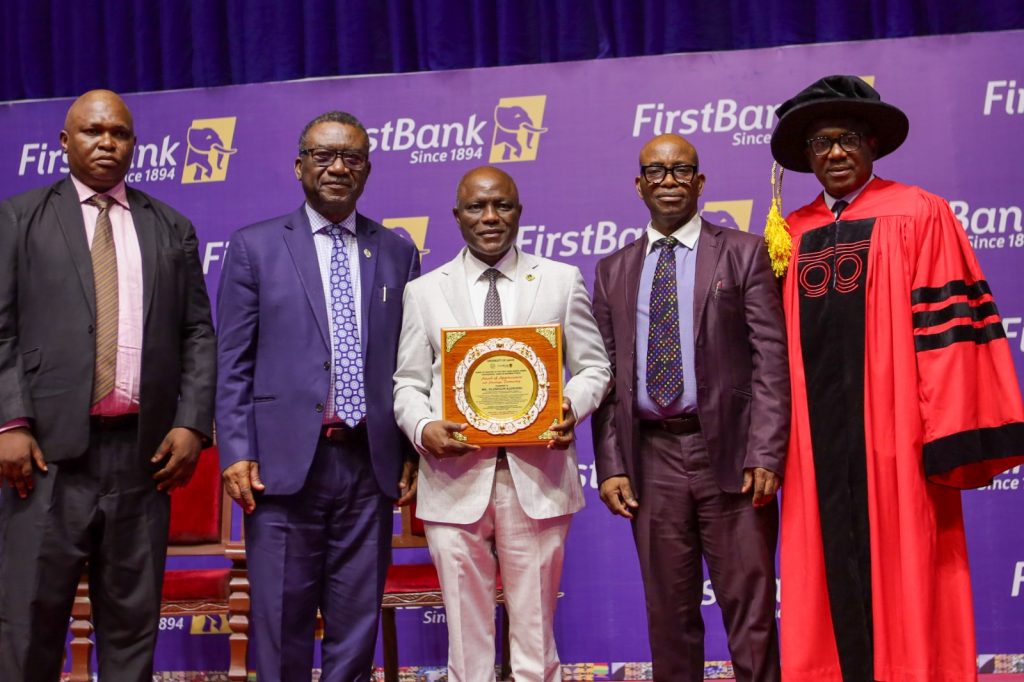
In addition to the plaque honourees, the Office of Advancement presented corporate gift packages as tokens of appreciation to several distinguished guests. These recipients included Distinguished Professor Akin Osibogun, Professor Sola Fajana, Professor Michael Ndugbu, Professor Chuka Ogbuneke, and Mr. Ephraim Osunde.


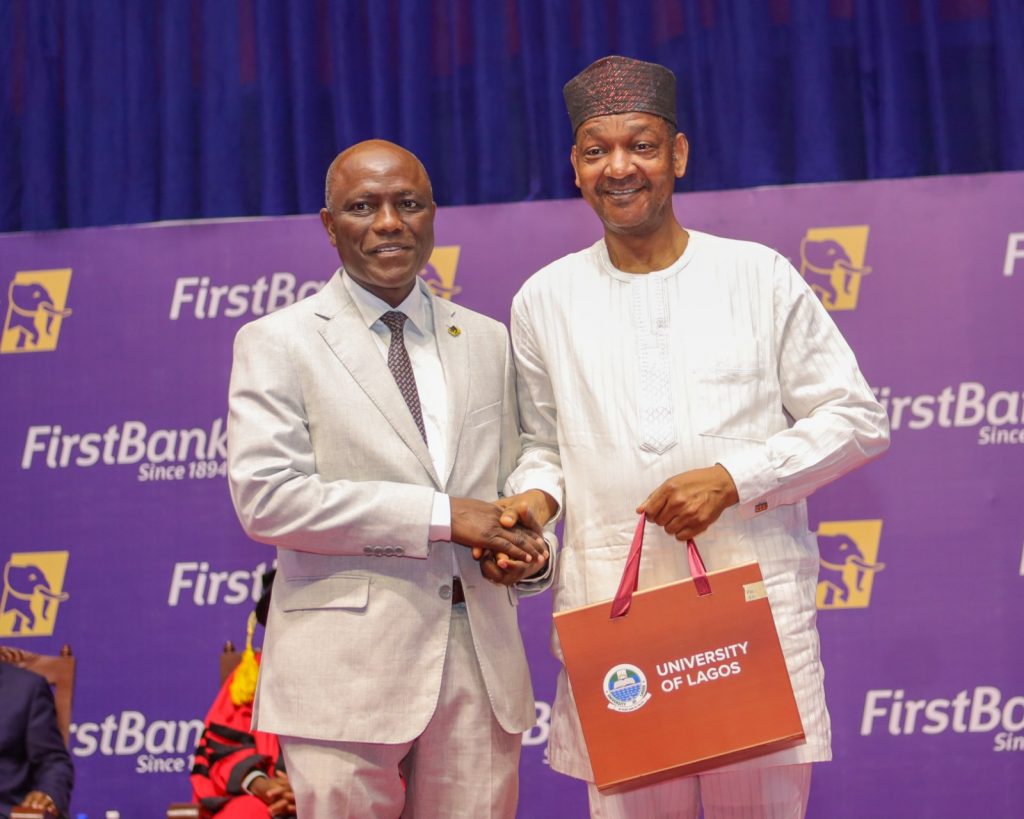


Closing the event, the Dean of the Faculty of Management Sciences, Professor Abdul-Hameed Sulaimon, represented by the Head, Department of Actuarial Science and Insurance, Professor Ismaila Adeleke delivered a vote of thanks.
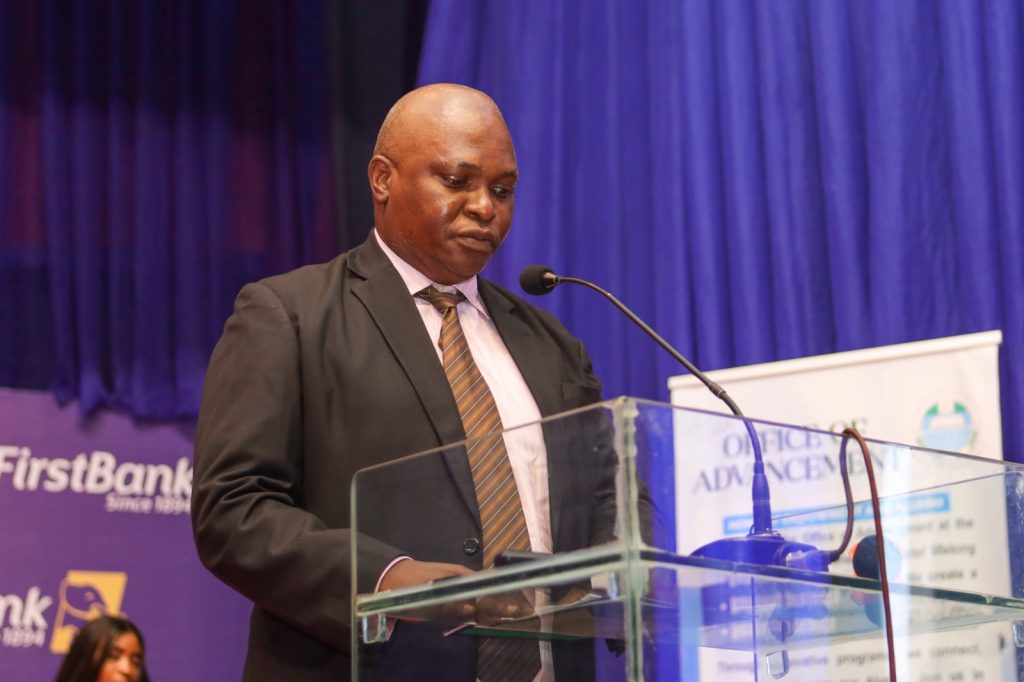
According to him, “Ethical behaviour is not a luxury reserved for corporations or formal institutions. It matters just as much at the level of the market trader, the micro-entrepreneur and the everyday professional.” He commended Professor Amaeshi for a lecture that challenged the audience to see ethics not as abstract theory but as something lived daily in businesses, communities and institutions.
He thanked First Bank for its enduring partnership with the University, and urged everyone present not to leave the ideas shared behind the auditorium walls, but to carry them into classrooms, research, and enterprise.
With this inaugural lecture, an endowment that lay dormant for over three decades has been transformed into a vibrant platform for advancing business ethics.
Report: Lynda Onah
Photographs: Maleeq D. Quadri (Student Intern)