
A plant most people dismiss as a nuisance clinging to tree branches has yielded what may be one of the most promising contributions to diabetes science in recent years, by the University of Lagos. For centuries, African mistletoe has hung quietly from trees across Nigeria, harvested by herb sellers long before anyone could explain why it worked.
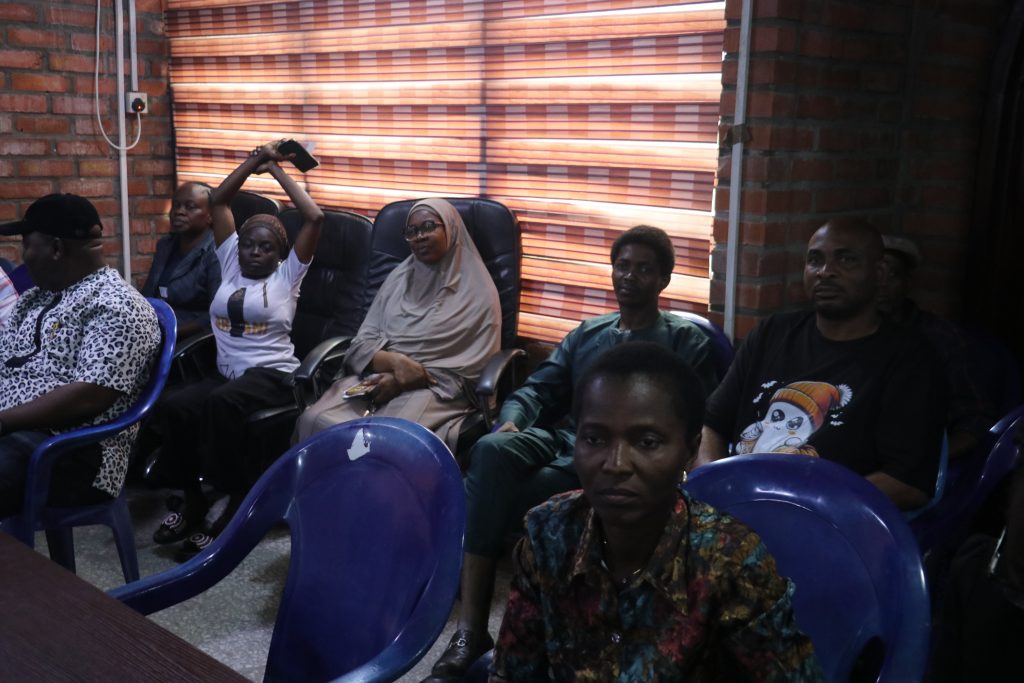
The findings were presented by Dr Elizabeth Oluwakemi Bamgbade, a lecturer in the Chemistry Unit of the Distance Learning Institute (DLI), during the Institute’s final academic seminar of the 2025/2026 session, held Thursday, July 30, 2026, at the DLI Board Room. Her eye-opening presentation, titled “Medicinal Potentials of African Mistletoe in Type 2 Diabetes Mellitus Management,” detailed years of research into Phragmanthera incana, a specie of African mistletoe, and its potential as a source of new anti-diabetic drugs.
Declaring the seminar open, the Director of DLI, Professor Risikat Dauda, welcomed attendees and set the stage by highlighting the institute’s core mission for the academic year. She emphasised the critical role of collaborative academic exchange across faculties.

“We need to exchange ideas and learn from each other,” the Director noted, adding that DLI carries a unique responsibility to promote interdisciplinary research. The Director urged researchers to translate complex laboratory findings into accessible insights for scholars across diverse disciplines from economics to education while leveraging peer feedback to refine research outputs for publication in high-impact global journals.
She described interdisciplinary exchange as central to DLI’s responsibility as an institution of open and distance learning, and urged researchers to make their findings accessible to colleagues across disciplines. “We need to exchange ideas and learn from each other,” Professor Dauda said.
Where the Story Begins: In the Body, Not the Lab
With enthusiasm and articulate delivery, Dr Bamgbade opened not with data but with biology, walking the audience through what actually happens when diabetes takes hold.


Insulin, she explained, exists “to mop up glucose,” ferrying it from the bloodstream to cells for energy. When that system falters, glucose accumulates instead, and over time the damage compounds: nerve deterioration, organ failure, stroke, blindness, kidney disease, amputation, death. As she put it plainly, sustained high blood sugar “results in certain complications” that ultimately prove fatal if left unmanaged.
It is a disease, she reminded the room, that the World Health Organisation ranks as the ninth leading cause of mortality worldwide, with Type 2 diabetes, “developed as a result of lifestyle or environmental factors,” accounting for 90 percent of cases. Global figures are projected to climb from 463 million cases in 2019 to 853 million by 2050, with Nigeria already counted among the ten most affected nations.
Existing treatments, she noted, come at a price. Oral hypoglycemic drugs manage the disease but “come with side effects,” including lactic acidosis, weight gain, and painful injection sites, serious enough that patients and researchers alike have turned toward plant-based alternatives long trusted in traditional medicine because they are “affordable, accessible,” and proven therapeutic.
The Search Begins in the Market, Not the Microscope
Her investigation began not in a laboratory but in the marketplace. Between 2010 and 2017, Dr Bamgbade visited open herbal markets across Mushin, Oyingbo, Lagos Island, and Ajegunle, where she interviewed herb sellers informally about the plants their customers relied on to manage diabetes. Out of those conversations came thirty-one medicinal plants, each collected, identified, and authenticated at the University of Lagos Herbarium.

From that pool, four candidates were selected based on how frequently they appeared in traditional use: African mistletoe (Phragmanthera incana), Chenopodium ambrosioides, Tapinanthus bangwensis, and Lippia multiflora. Each was taken through rigorous in vitro testing to determine its antidiabetic potential and safety profile.
African mistletoe stood apart from the rest. It recorded the lowest IC₅₀ value among the four, at 252.60 µg/mL, and posted the highest selectivity index of 8.9, a result indicating strong anti-diabetic potential with minimal harm to normal cells. It was this performance, Dr. Bamgbade said, that made it the clear choice “from all the four” to carry forward into deeper study.
To extract the plant’s active compounds, her team applied five solvents of varying polarity, each modelled on preparation methods already familiar in traditional practice, before testing the extracts in vivo using albino rats against Glibenclamide, a standard reference drug. Across three experimental models simulating hypoglycemic response, Type 2 diabetes, and Type 1 diabetes, the hexane extract consistently proved the most effective at lowering blood glucose.
Further analysis using column chromatography and spectroscopic techniques, including NMR, infrared spectroscopy, and mass spectrometry, led to the isolation of two bioactive compounds: Friedelin and 1-Octadecene, from the plant’s leaves for the first time. Molecular docking studies confirmed both compounds as effective inhibitors of Type 2 diabetes protein targets.


However, Dr. Bamgbade found that Friedelin, despite its therapeutic promise, exhibited immunotoxicity, prompting her team to design a chemical derivative to overcome the limitation. That derivative, 4-methylaniline (BAM-4), delivered a binding energy of -10.6 kcal/mol, surpassing Friedelin’s -10.2 kcal/mol, and was found to be non-toxic, outperforming metformin, the global reference drug against which it was benchmarked.
“The study highlights the potential of Friedelin isolated from P. incana leaves for diabetes management, so that safer derivatives of the drug can be developed as potential drug candidates,” Dr Bamgbade said.


Following the presentation, the seminar transitioned into a lively interactive question-and-answer session. Attendees sought to understand the practical, everyday implications of the research, prompting detailed responses from Dr Bamgbade.
The first line of questioning centred on mistletoe’s unusual biology as a parasitic plant. Because it draws its nutrients from a host tree, participants wanted to know whether the specific tree it grows on could alter its chemical strength and medicinal effectiveness.
Dr Bamgbade confirmed that host trees do significantly influence the plant’s phytochemical profile and disclosed that host-specific comparative evaluations are already planned as a critical next phase of her research to map out which host trees yield the highest concentration of active anti-diabetic compounds.


Safety concerns dominated the next round of questions. Several attendees pointed to the common practice of boiling or soaking mistletoe leaves at home and asked how ordinary people could avoid unknowingly extracting toxic impurities alongside the plant’s beneficial compounds.
In response, Dr Bamgbade cautioned firmly against unstandardized home brewing, explaining that raw crude extracts often carry unwanted impurities together with active molecules. Her team, she said, is now working to establish standardized extraction guidelines and precise solvent ratios to make safe, impurity-free preparation possible.


The floor then turned to a question with commercial weight behind it: how does a discovery like this actually reach the public? Interdisciplinary participants pushed Dr Bamgbade on the university’s plans to bridge the gap between laboratory findings and pharmacy shelves.
According to her, while the isolation of BAM-4 and its molecular modelling represent significant preliminary breakthroughs, she said, turning the compound into a commercial tablet demands multidisciplinary collaboration partnerships with pharmacologists, clinical researchers, and industrial drug manufacturers to carry the molecule through preclinical trials and toward scalable production.
She recommended further research on the derivatised Friedelin compound to explore even higher anti-diabetic activity, describing her findings as a foundation for future drug development from the plant.


The seminar closed to warm applause, bringing DLI’s academic year seminar series to a fitting end. Dr Bamgbade’s findings add to a growing body of evidence validating the therapeutic use of indigenous plants and reflect the UNILAG’s continued commitment to research that addresses pressing public health challenges, work that speaks directly to Sustainable Development Goal 3 on good health and well-being, and to UNILAG’s enduring pledge to serve society through science grounded in the realities of its own environment.
Report: Lynda Onah
Photograph: Samuel Dosumu