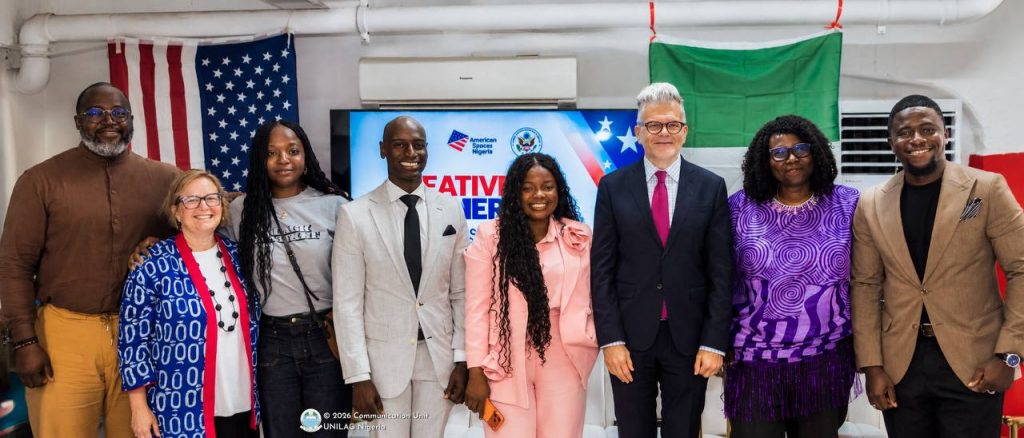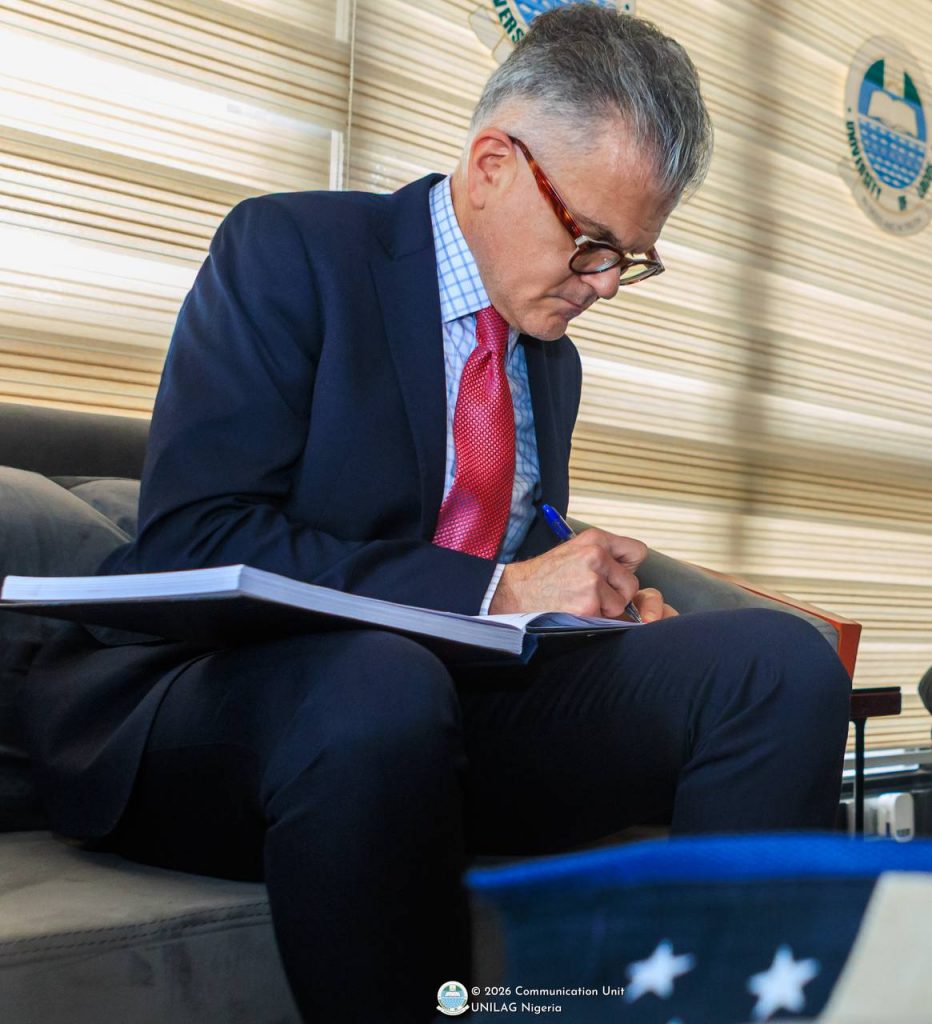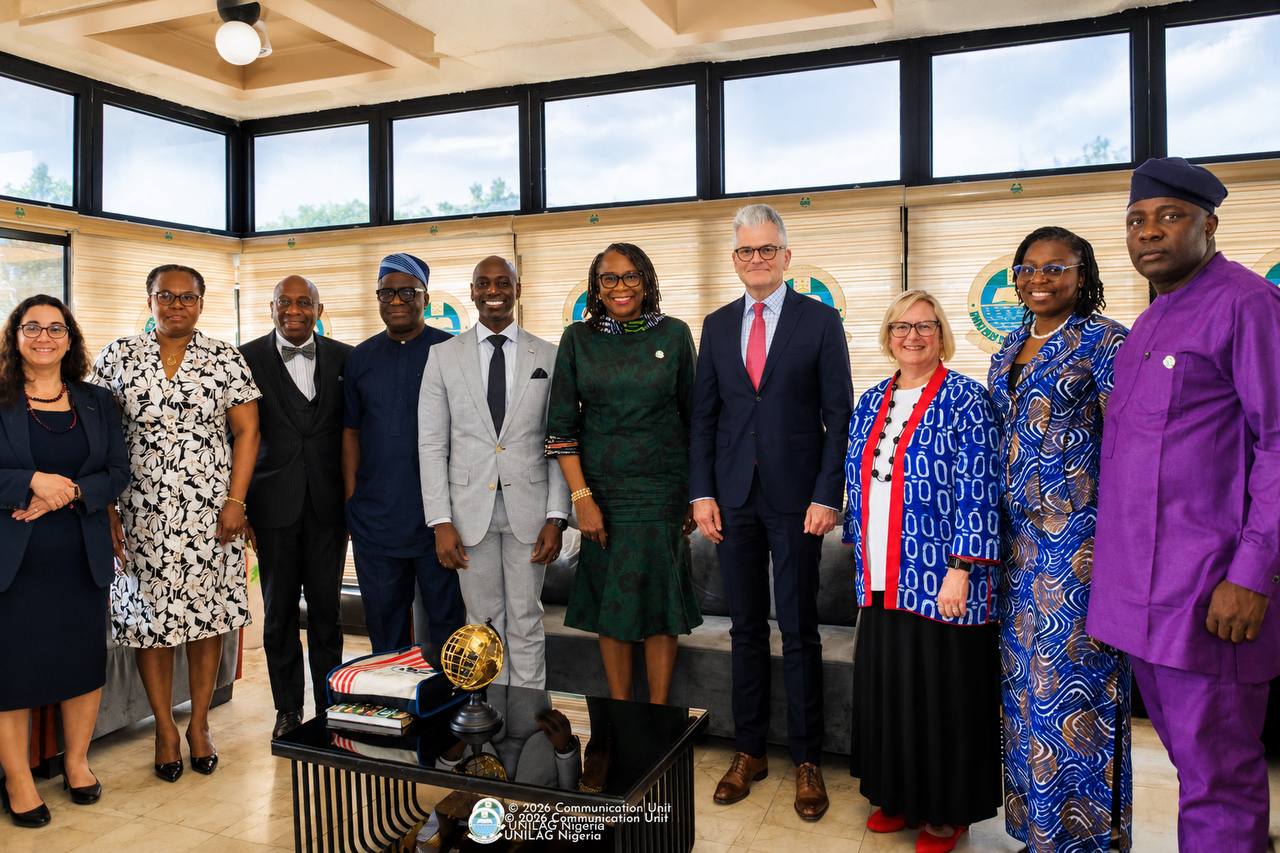
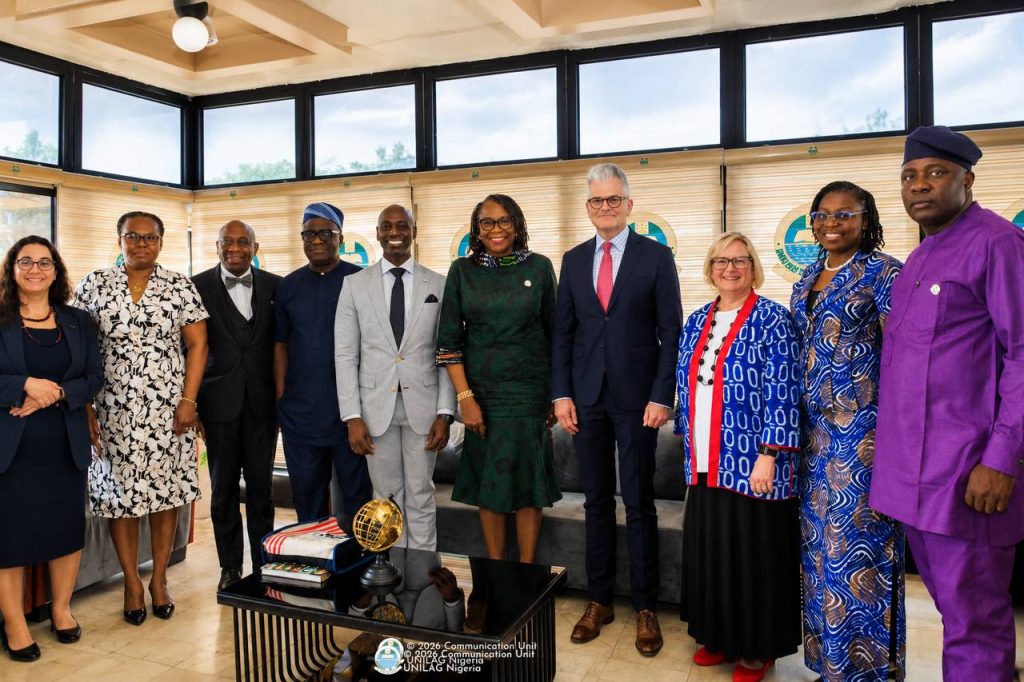
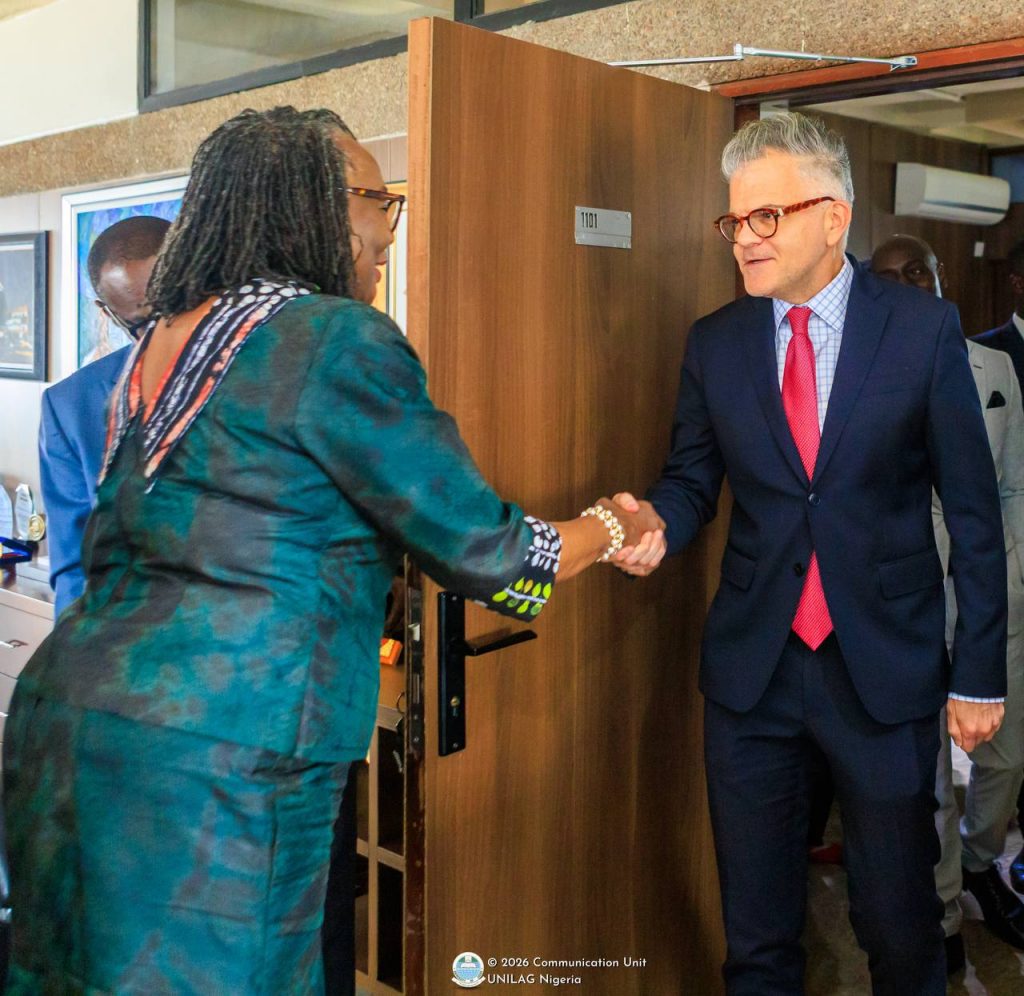
The Senate House Office of the Vice-Chancellor of the University of Lagos (UNILAG), Professor Folasade Ogunsola, OON, FAS, was the setting for high-level diplomatic and academic engagement on Tuesday, October 6, 2026, as she received two senior officials of the United States Government.
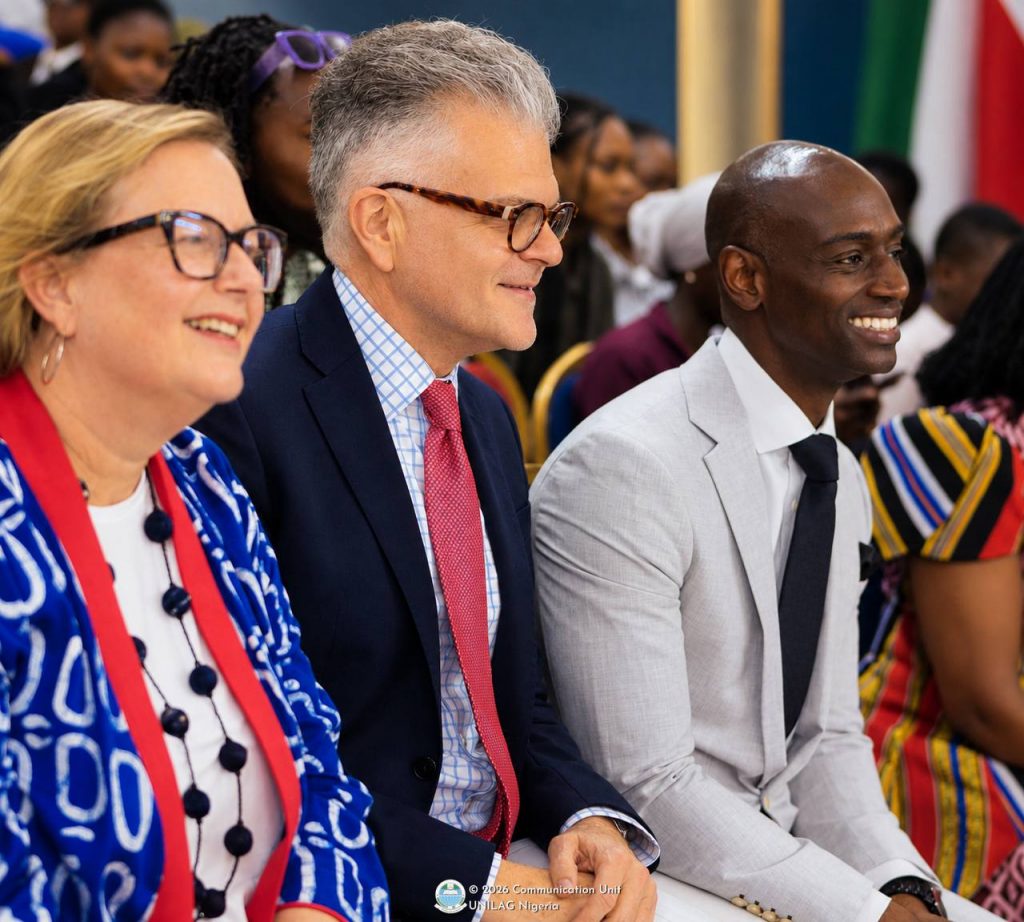
The visitors were Mr. Richard C. Michaels, Deputy Assistant Secretary in the U.S. Department of State’s Bureau of African Affairs, and Mr. Brandon Hudspeth, the new U.S. Consul General in Lagos.
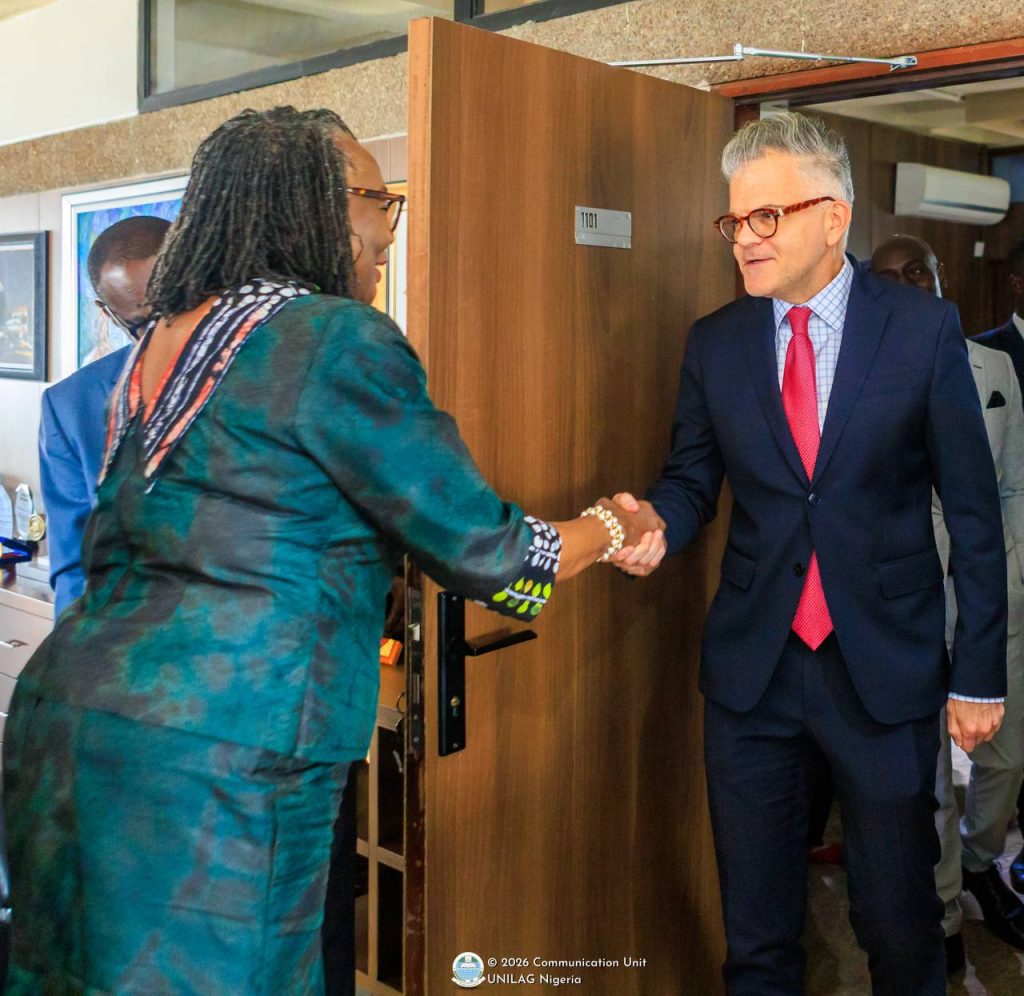
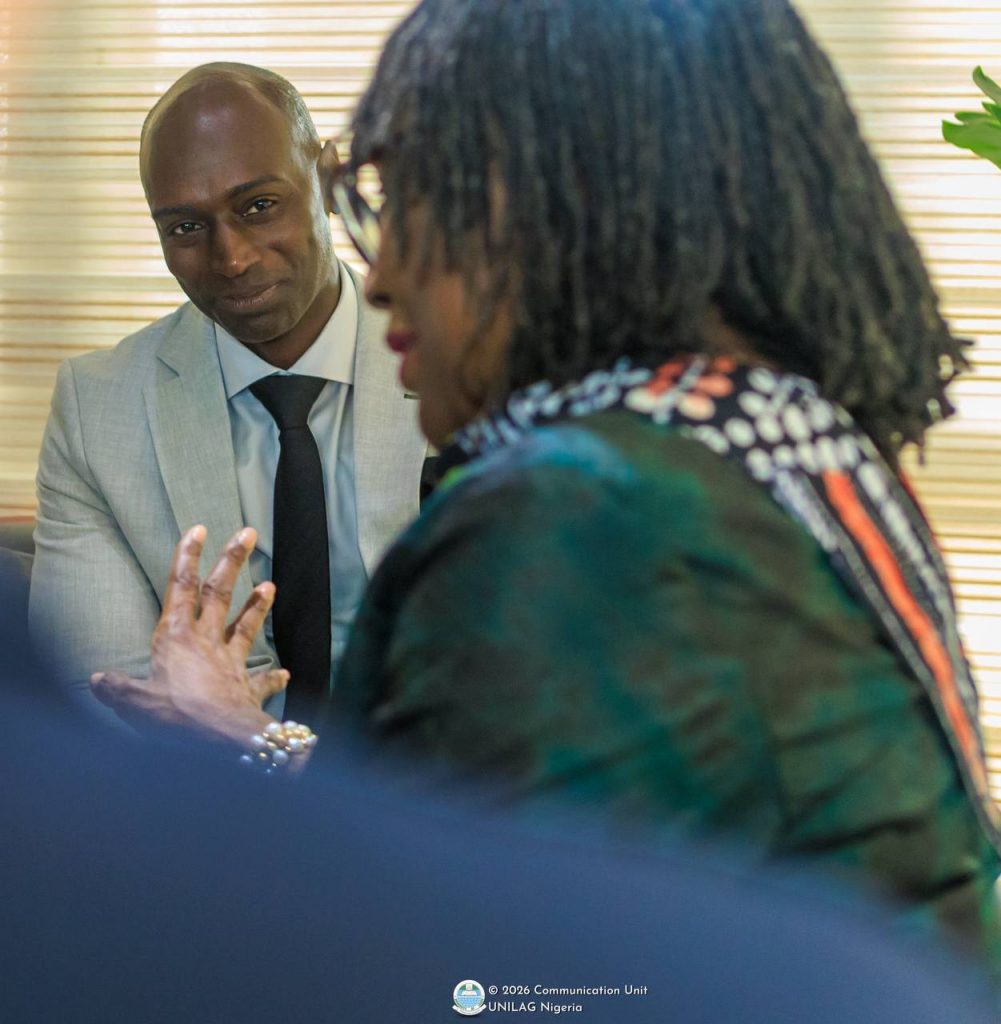
Professor Ogunsola received the delegation alongside members of the University Management team, including the Deputy Vice-Chancellor (Management Services), Professor Olumuyiwa Falaiye; Registrar and Secretary to Council, Mrs. Victoria Abosede Wickliffe; Bursar, Mrs. Oluwafunmilola Yetunde Adekunle; and University Librarian, Professor Christopher Olatokunbo Okiki.
The Vice-Chancellor provided an overview of UNILAG, including its longstanding partnerships with American institutions such as the University of Iowa, Case Western Reserve University, Spelman College and the University of Virginia.
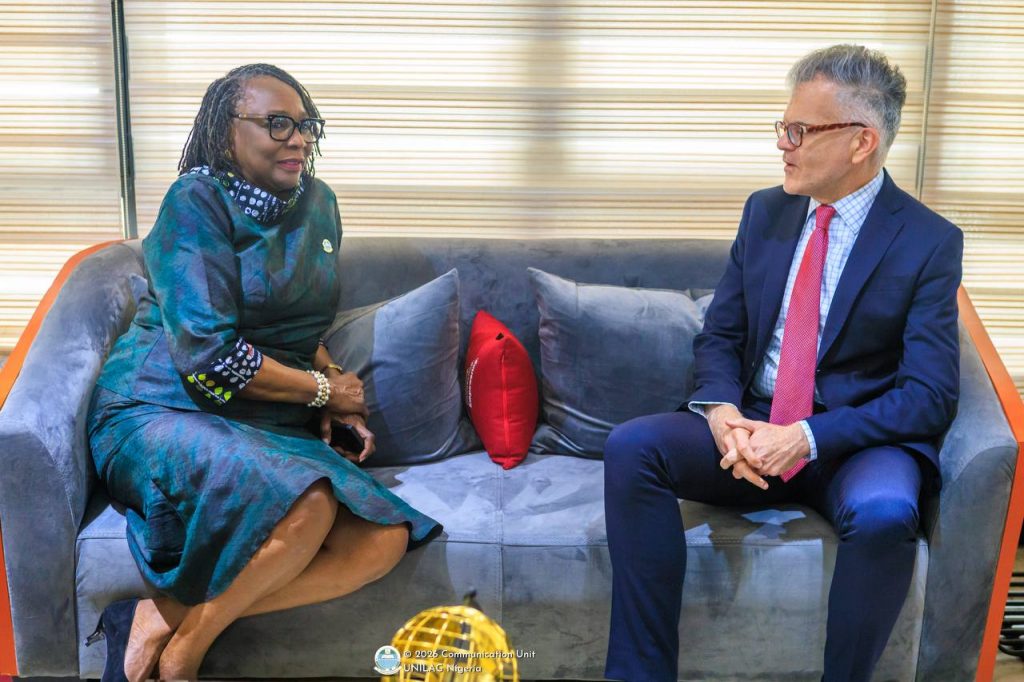
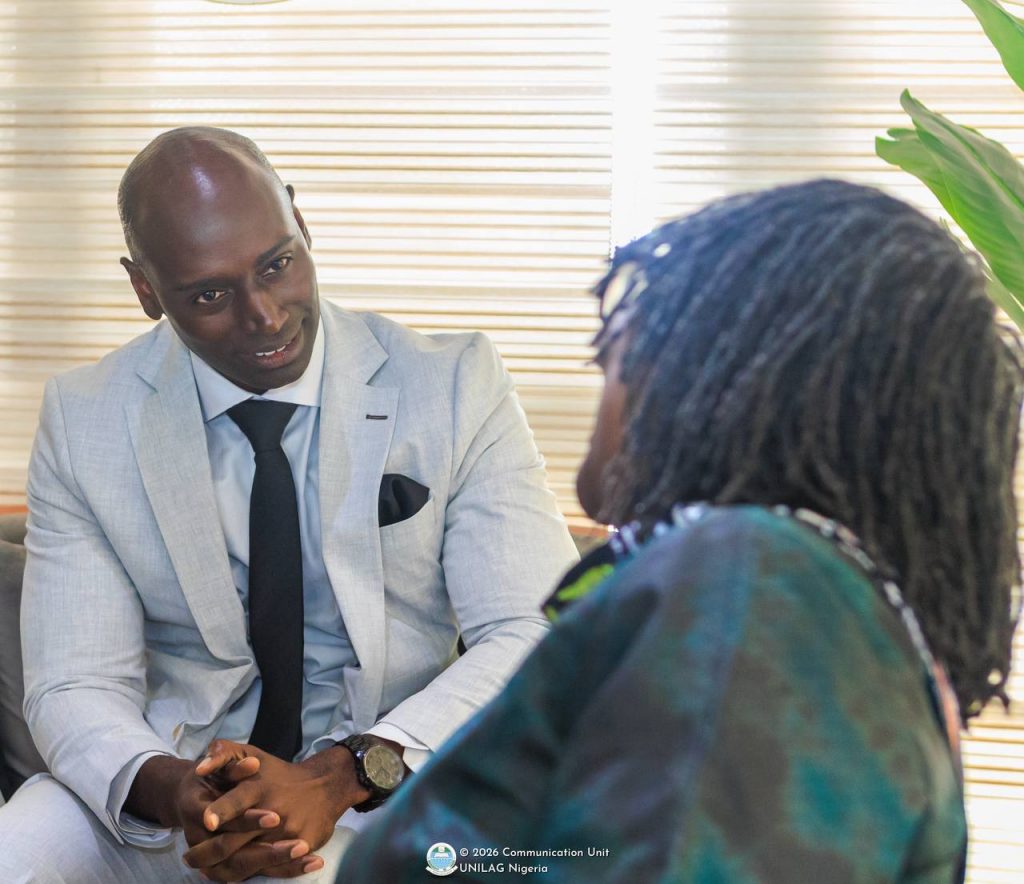
Professor Ogunsola also highlighted the University’s community college initiative in film, which brought together students of Mass Communication and Creative Arts, as well as the Foundation Programme, a one-year programme designed to prepare students for admission. She noted that UNILAG students had benefited from interactions and engagements with visiting American partners.
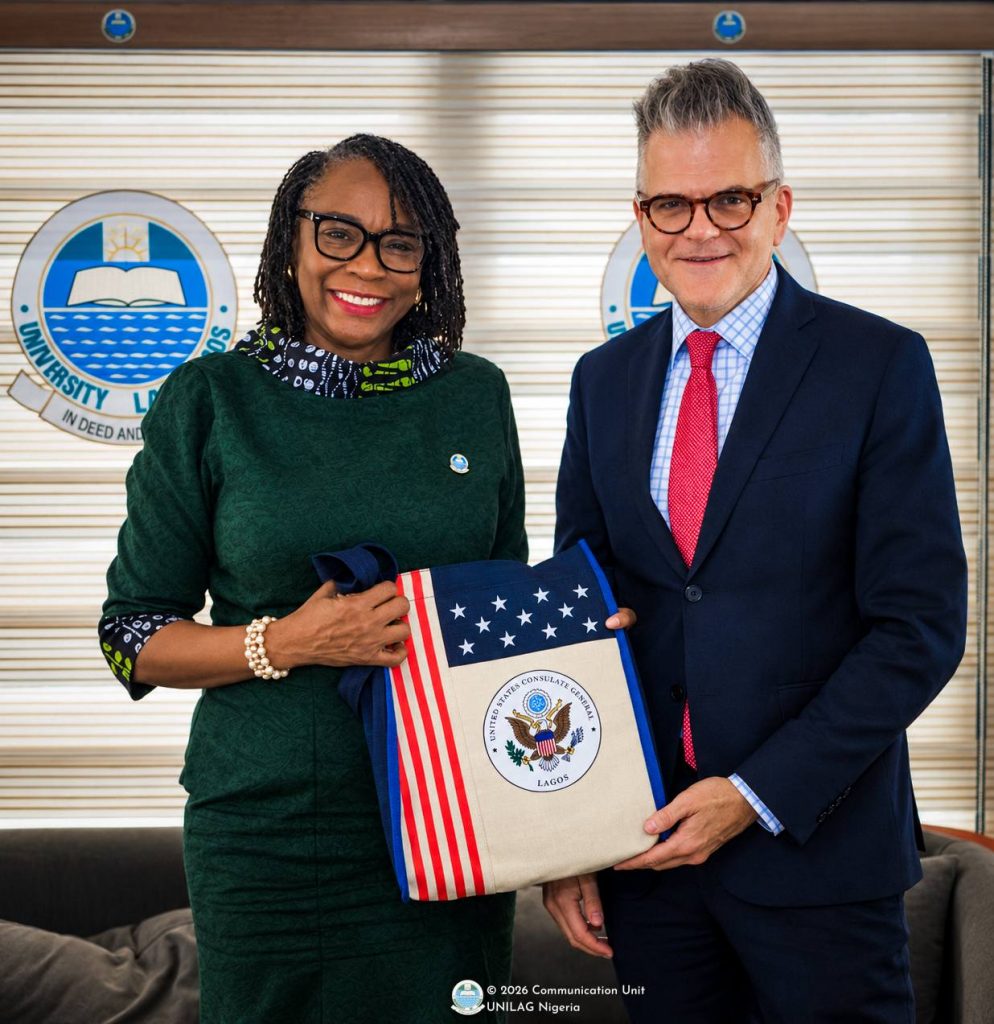
The courtesy visit concluded with an exchange of gifts between the University Management and the visiting officials, symbolising mutual respect and the strengthening of institutional ties.
Creative Commerce Panel at the UNILAG Window on America
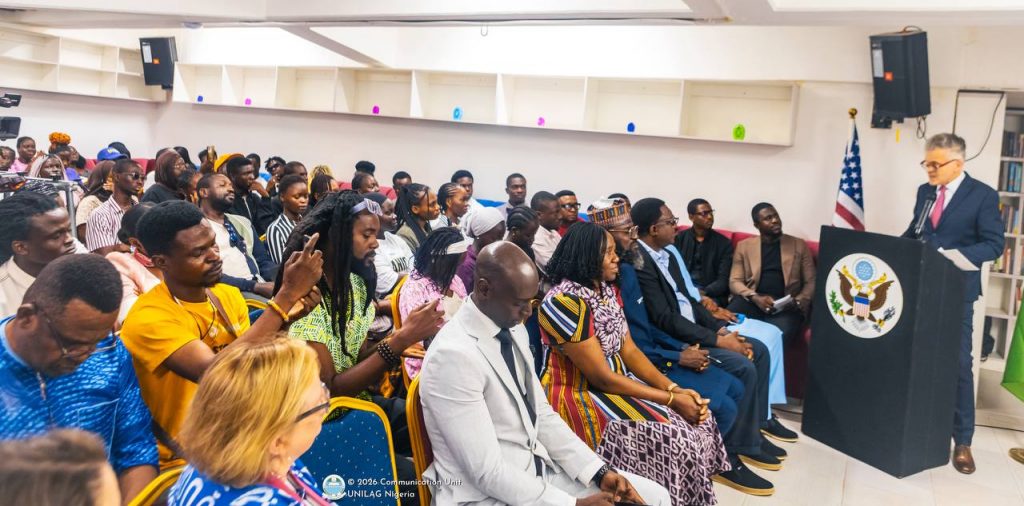
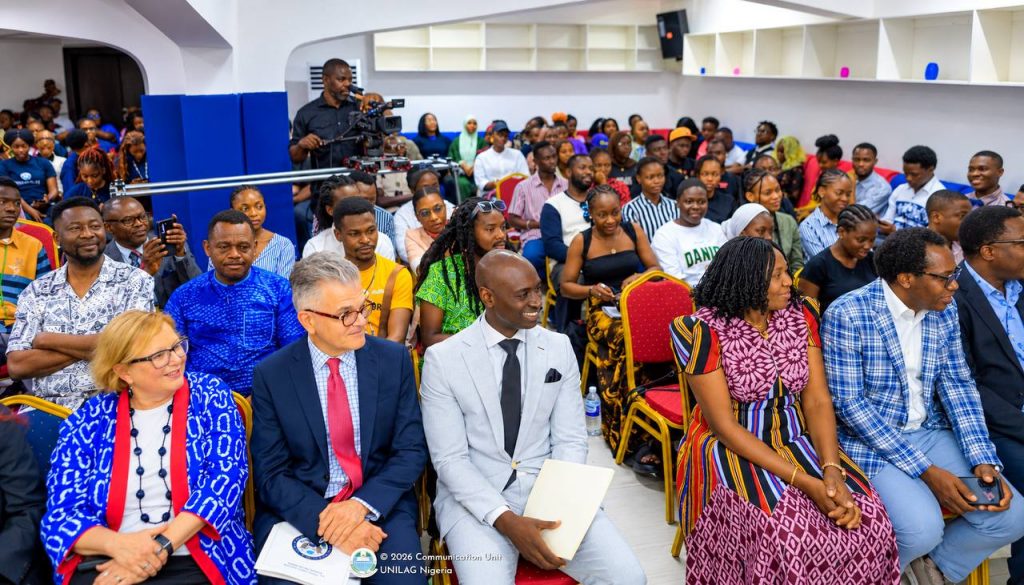
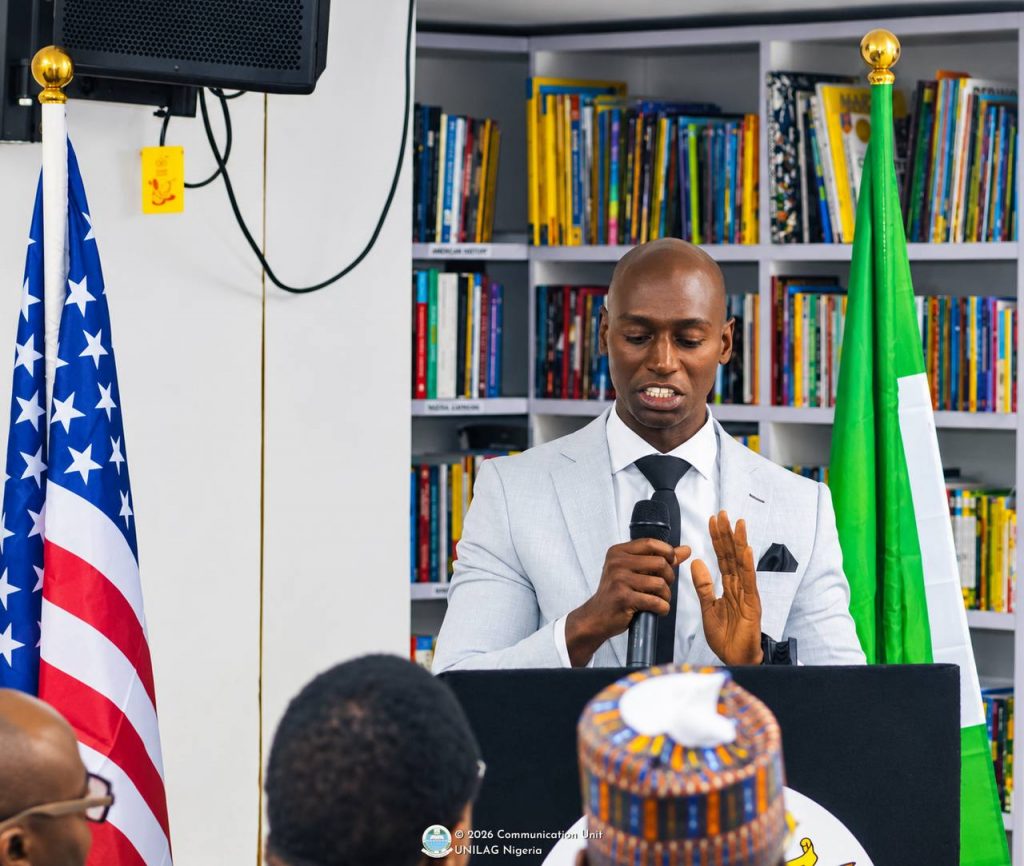
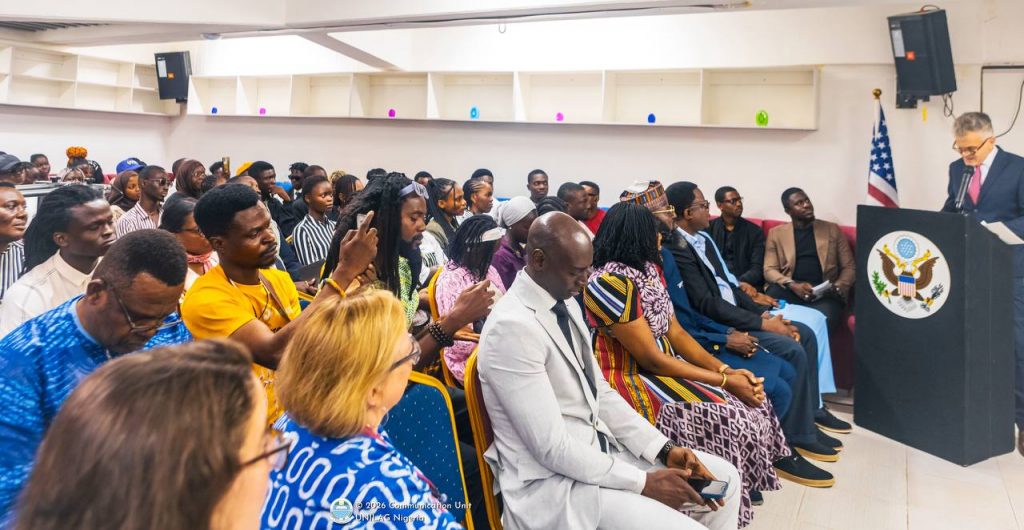
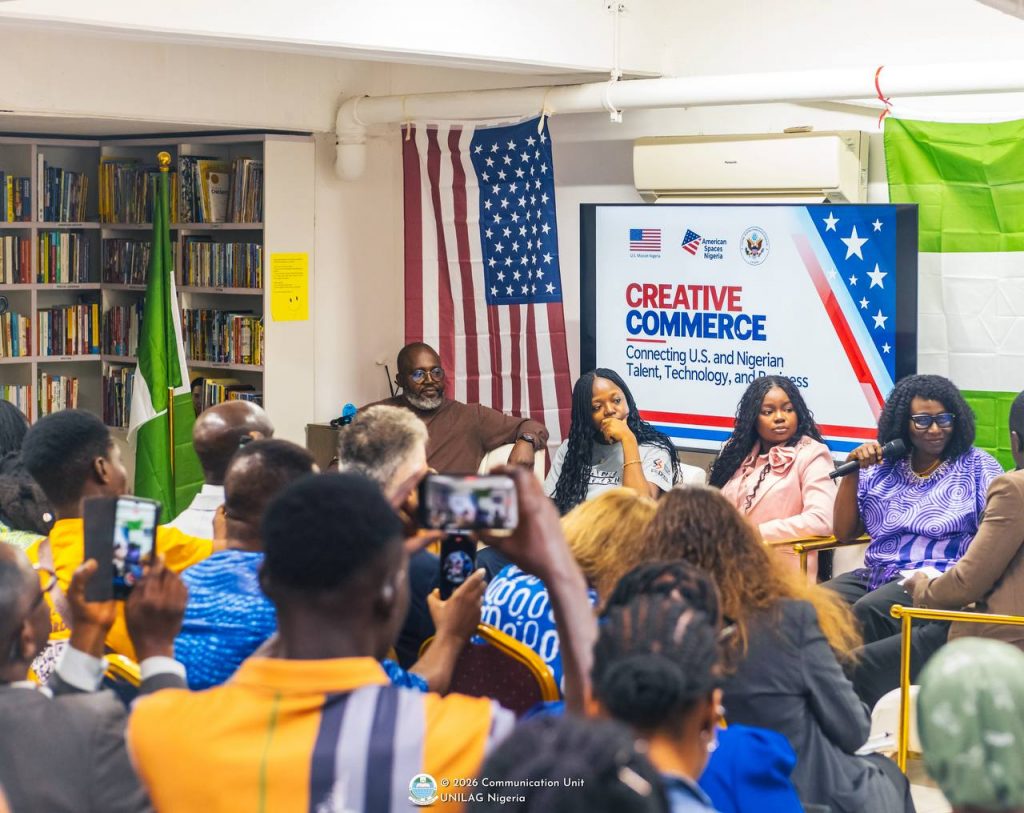
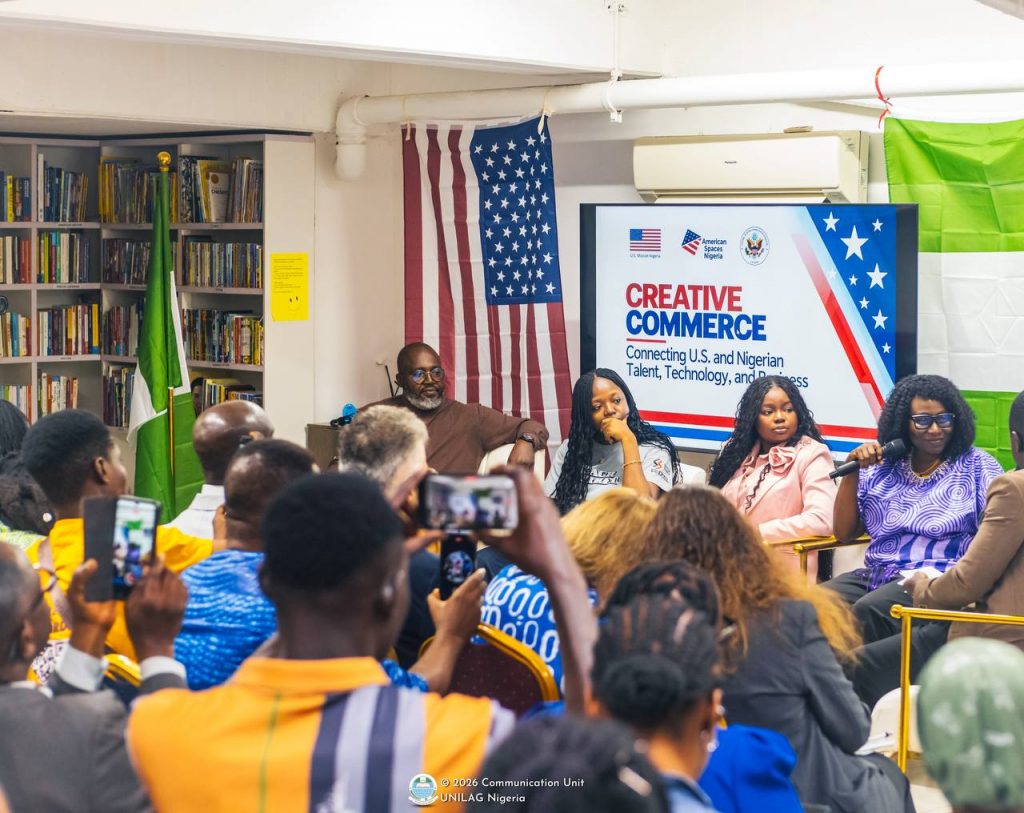
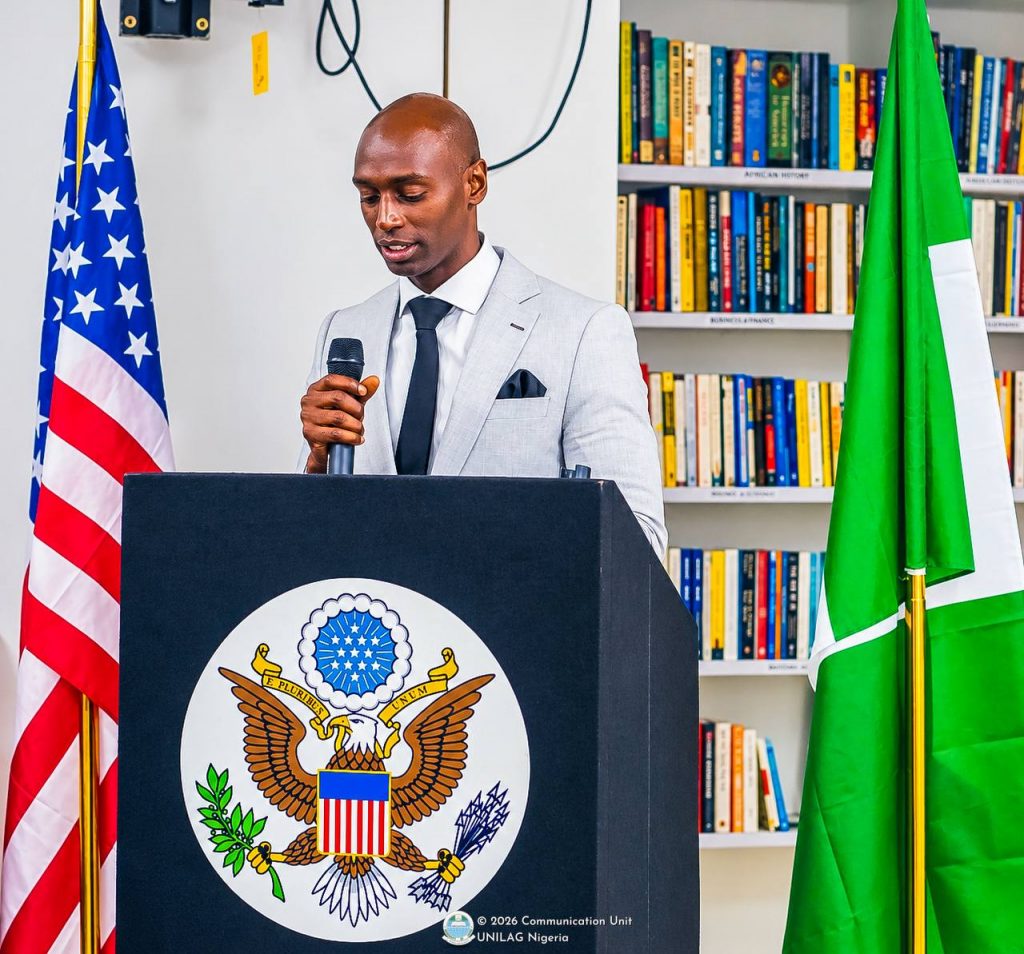
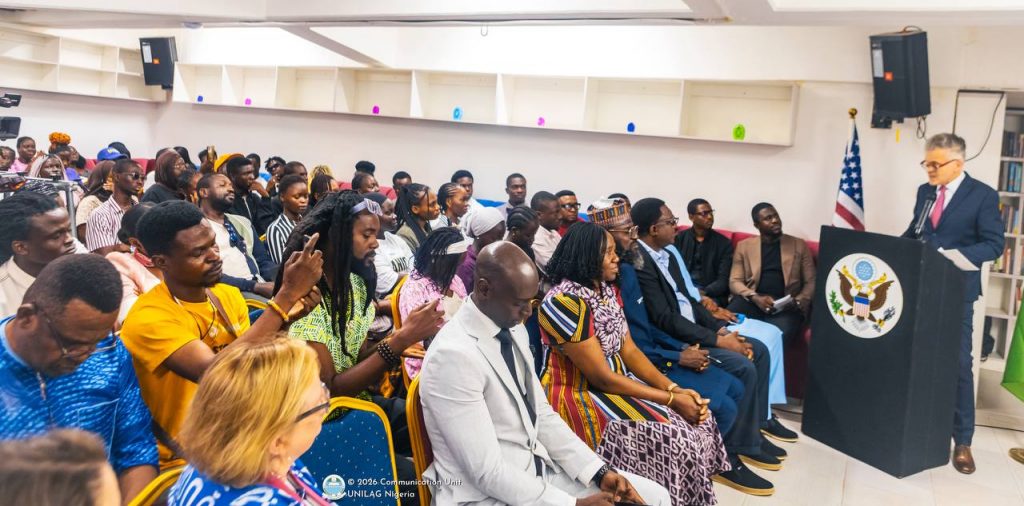
Following the courtesy visit, the delegation joined the Creative Commerce Panel, themed “Connecting U.S. and Nigerian Talent, Technology and Business,” at the UNILAG Window on America. The event was organised by the U.S. Mission Nigeria and American Spaces Nigeria.
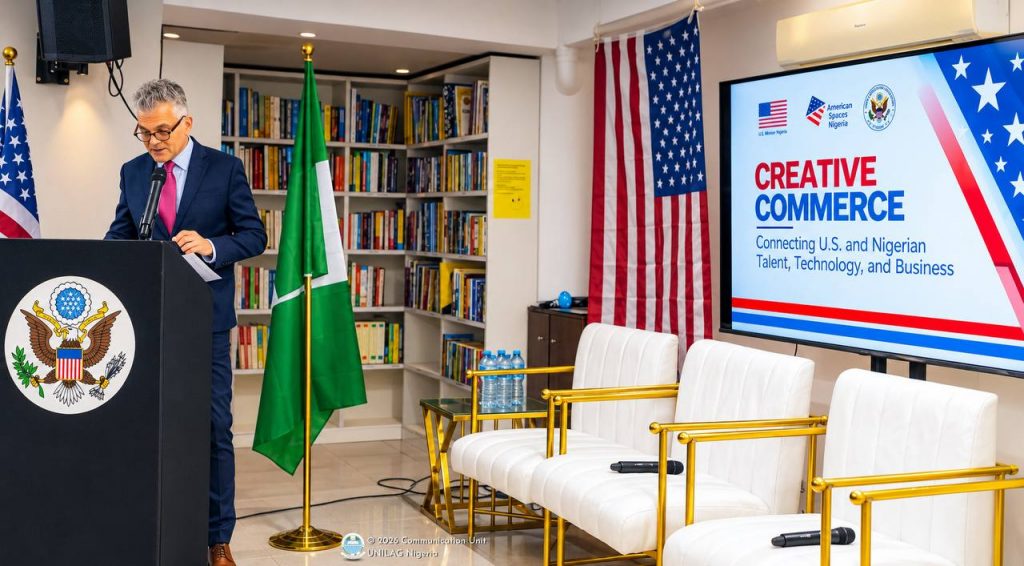
In his remarks, Mr. Michaels said the United States was prioritising trade and investment over dependency and assistance in its engagement with Nigeria. He noted that Nigeria is America’s second-largest trading partner in sub-Saharan Africa, with nearly $15 billion in goods and services trade last year.
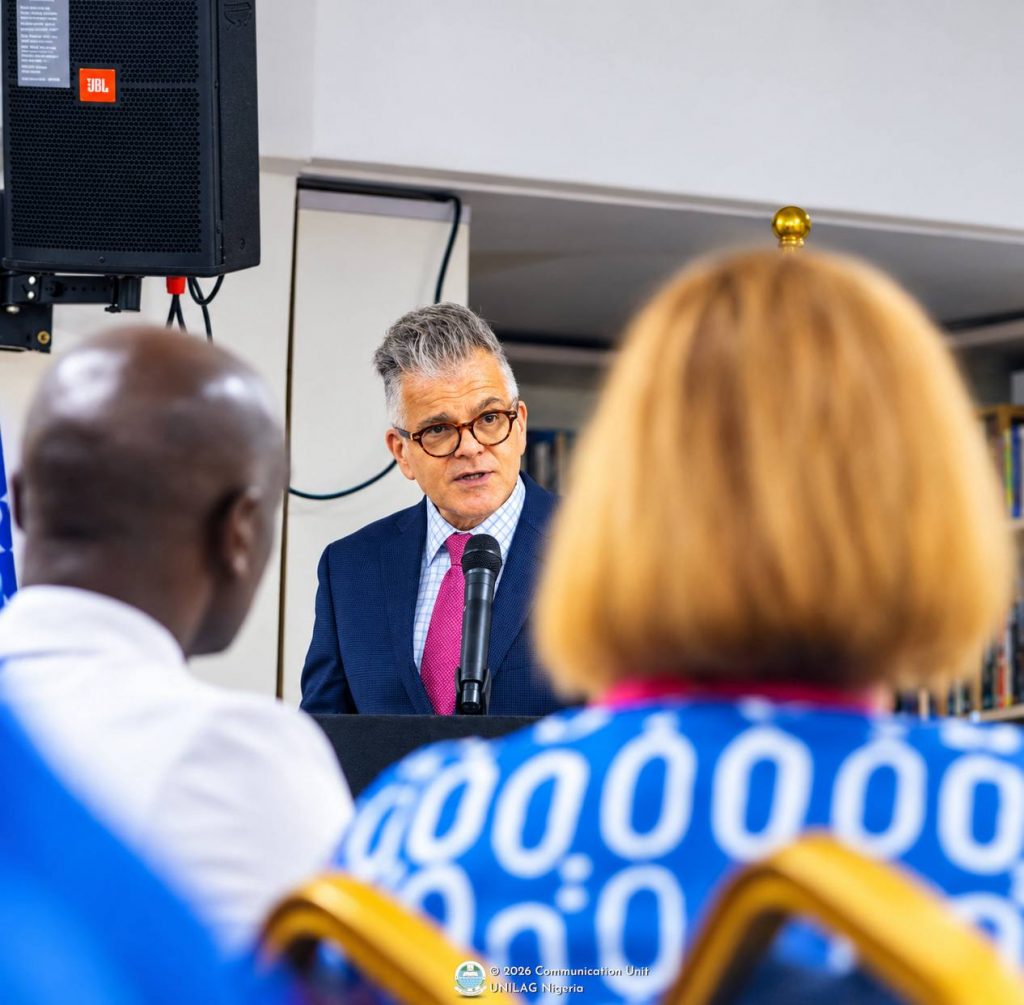
The diplomat added that more than 100 U.S. companies operate in Nigeria, with the creative economy emerging as one of the country’s major sectors. According to him, Nigeria has Africa’s largest entertainment industry and, by some measures, the world’s second-largest film industry.
He highlighted growing cultural exchange through Afrobeats performances on major U.S. stages, investments by American music companies such as Universal Music Group, EMPIRE and Warner Music Group, and similar collaborations in the fashion industry.
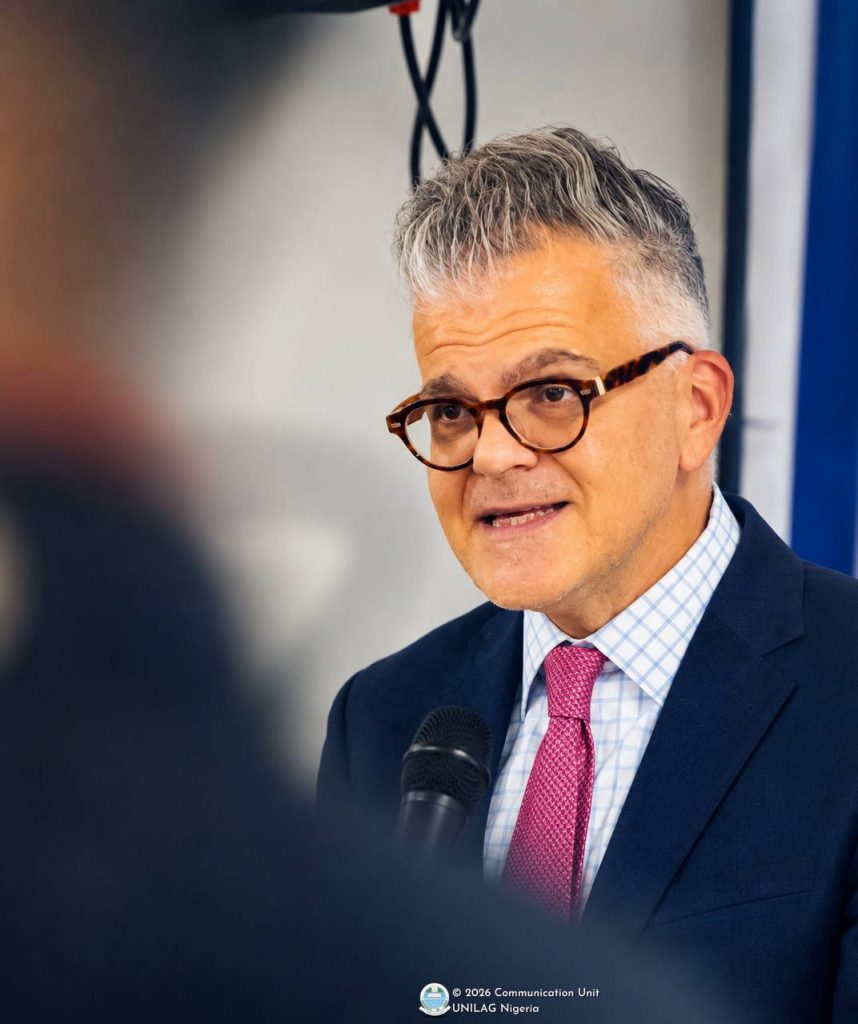
Mr. Michaels described these connections as a form of cultural diplomacy that creates jobs and generates demand on both sides of the Atlantic. He also pointed to programmes such as the American Film Institute, Global Media Makers and American Music Mentorship exchanges as platforms that help transform conversations and cultural exchanges into professional relationships and business opportunities.
The Creative Commerce Panel featured:
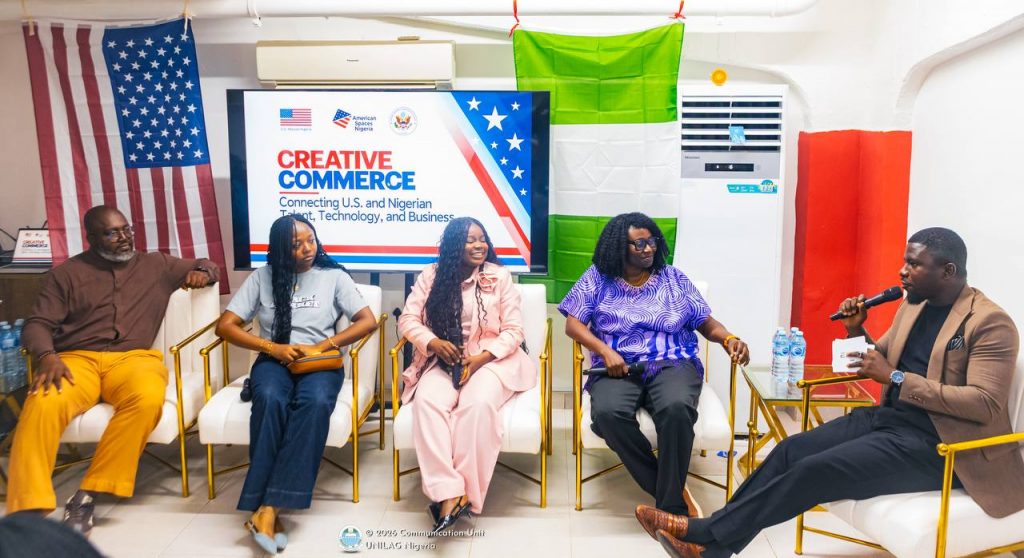
- Tobi Ayeni (Miss Techy), Content Creator and Tech Storyteller
- Kolawole Fashola, Vice President, Business Affairs and Operations, Temple Group
- Esther Kemi Gbadamosi, CEO/Creative Director, Radioixity Media
- Fatimah Gimsay, Screenwriter, Director and Producer
The panellists explored practical pathways for turning online audiences into sustainable businesses, stressing that clear value creation matters more than follower count alone. Emerging creators were encouraged to identify, develop and monetise their unique skills, participate actively in workshops and industry programmes, and pursue collaborations with established brands by demonstrating readiness, professionalism and value.
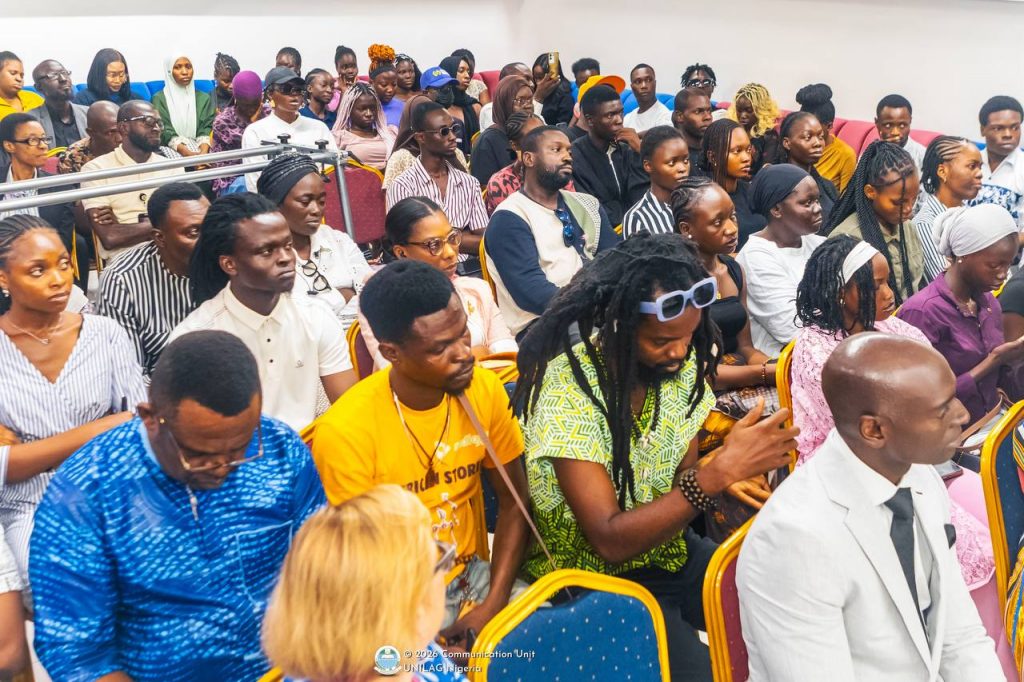
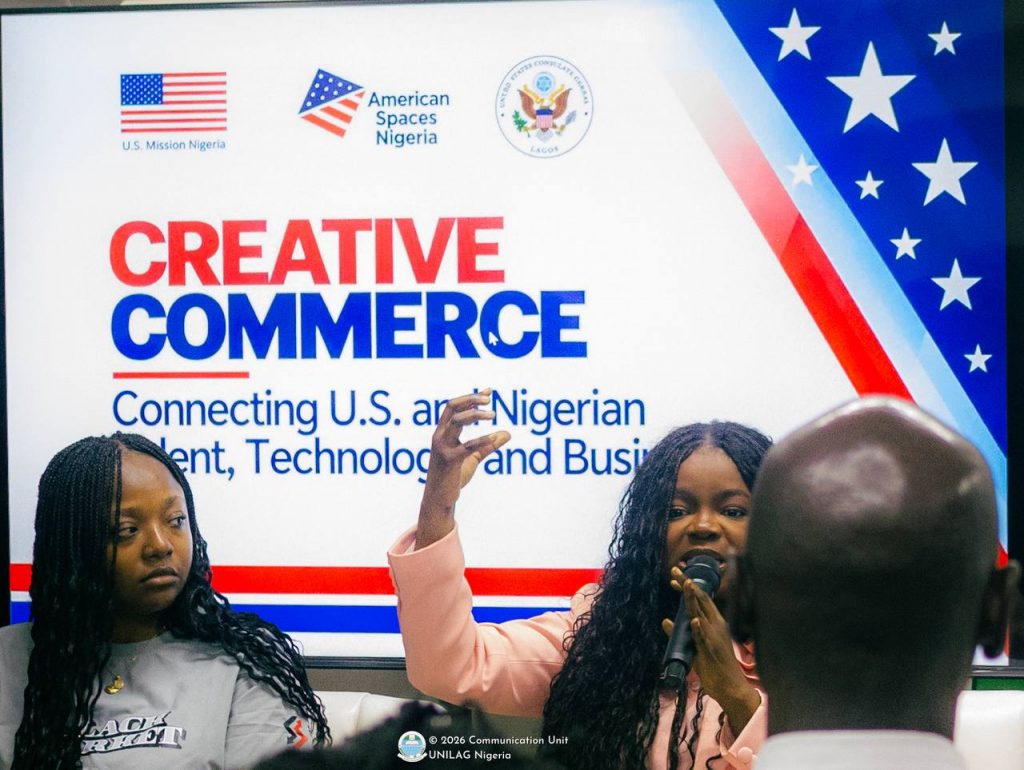
On storytelling, the speakers emphasised the need to balance authenticity with global appeal. They noted that Nigerian stories and experiences, particularly in animation, film, cosplay and festival culture, should retain their cultural specificity while remaining accessible to international audiences.
Authenticity, rather than production polish or star power alone, was identified as a key factor in attracting international audiences. Participants who had taken part in the African Creative Television Exchange programme shared how feedback sessions and cross-African exposure helped build resilience and reinforced the value of telling real, human stories rather than Westernised versions of familiar African narratives.
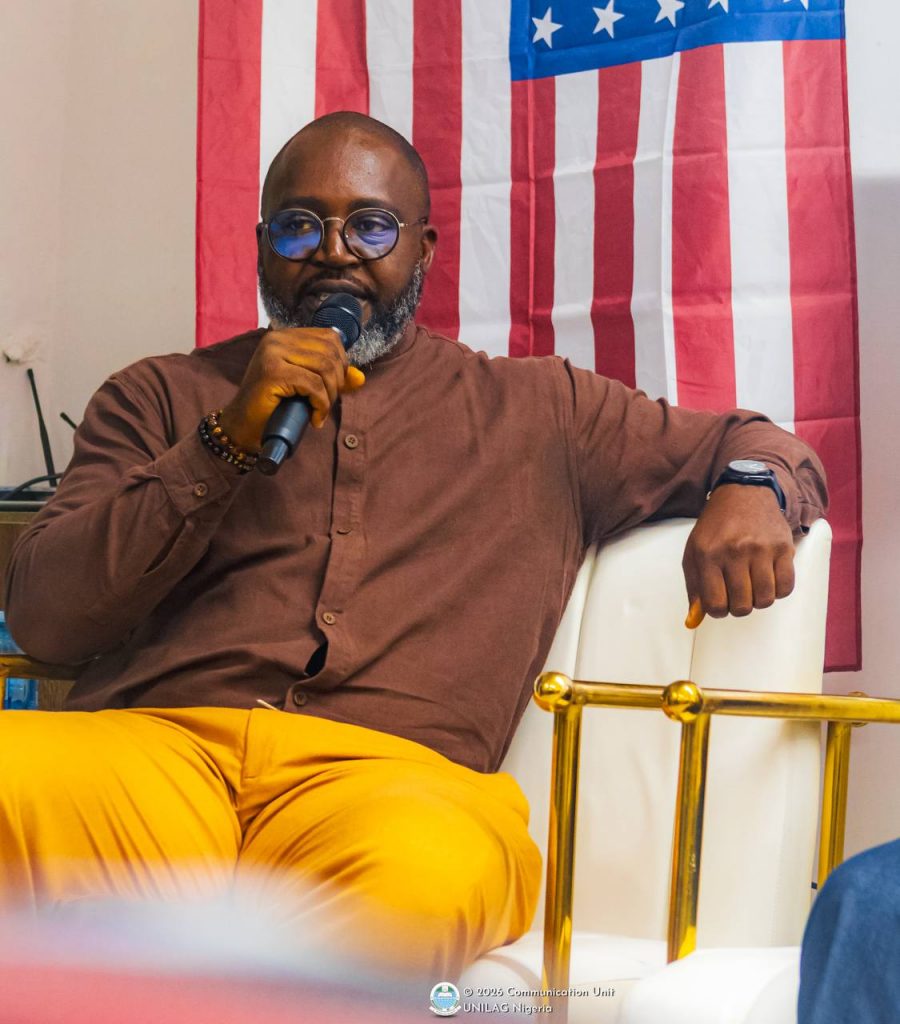
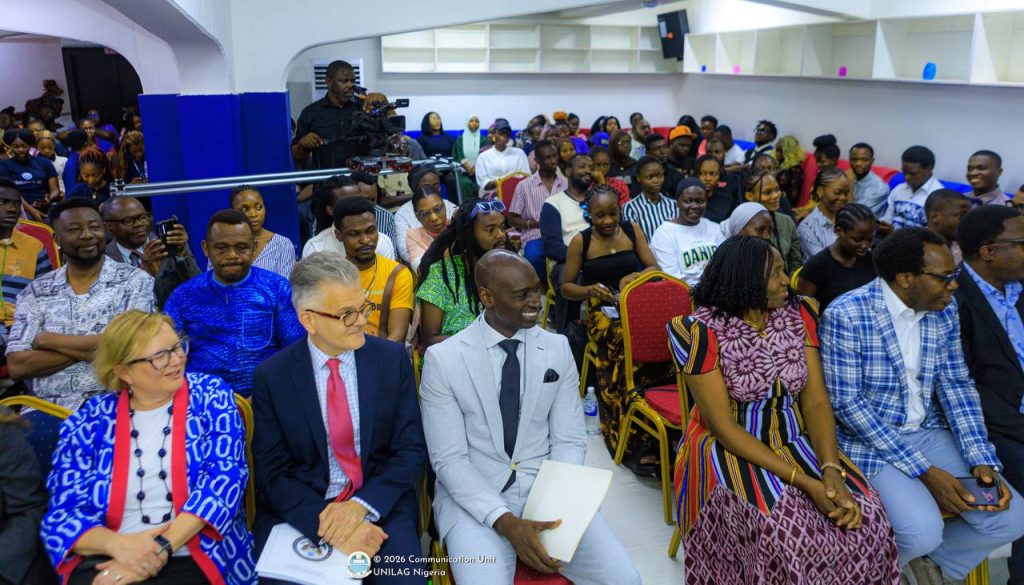
Artificial intelligence also featured prominently in the discussion. The panellists agreed that AI is lowering barriers to entry by enabling creators to produce visual and dramatic content without the large budgets traditionally required. At the same time, they stressed that story remains the differentiator: because identical prompts can generate similar results, personal voice and cultural perspective are what distinguish one creative work from another. Creators were therefore encouraged to embrace AI as a tool while retaining creative direction and ownership of their work.
The panel also identified the scarcity of Nigerian and African narratives in existing AI-generated content as a significant gap, and an opportunity for local creators to shape how African stories are represented in emerging technologies.
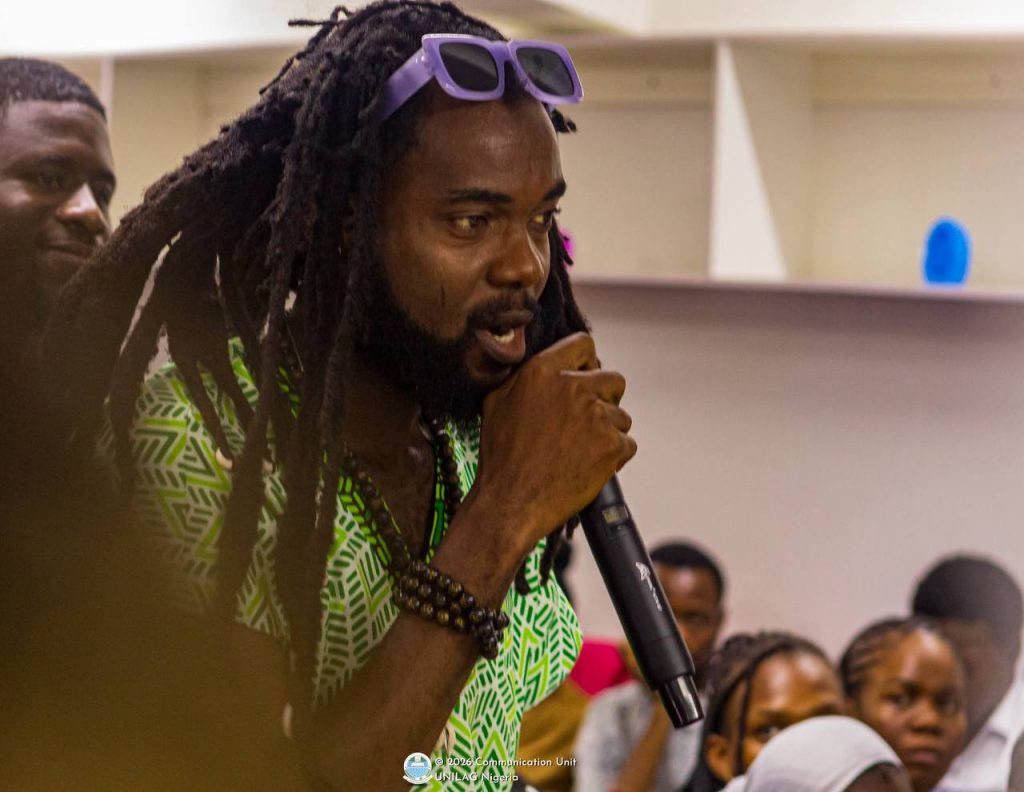
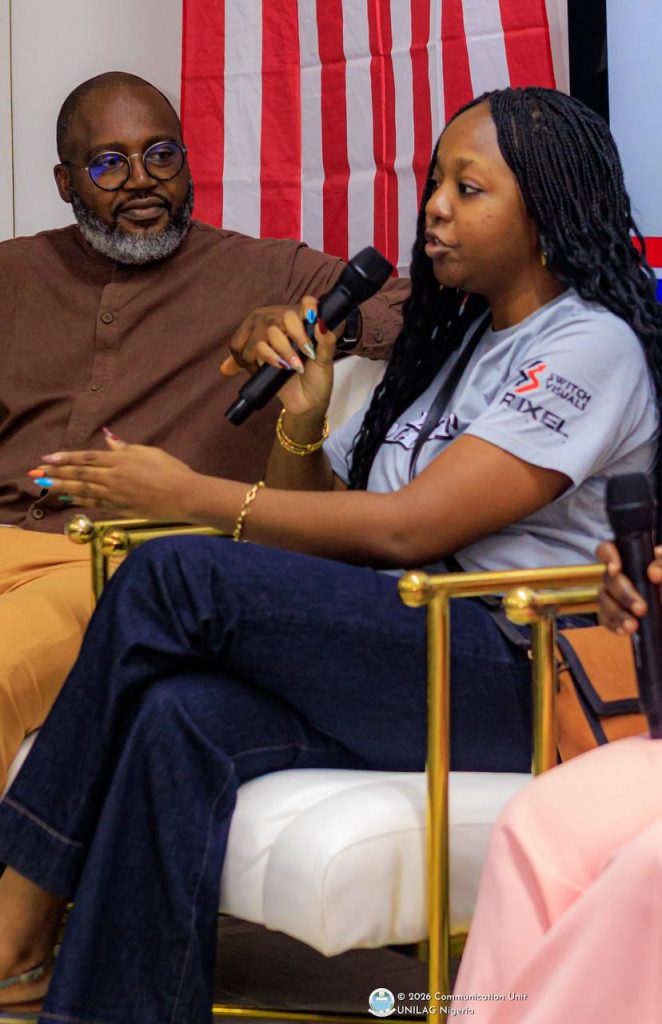
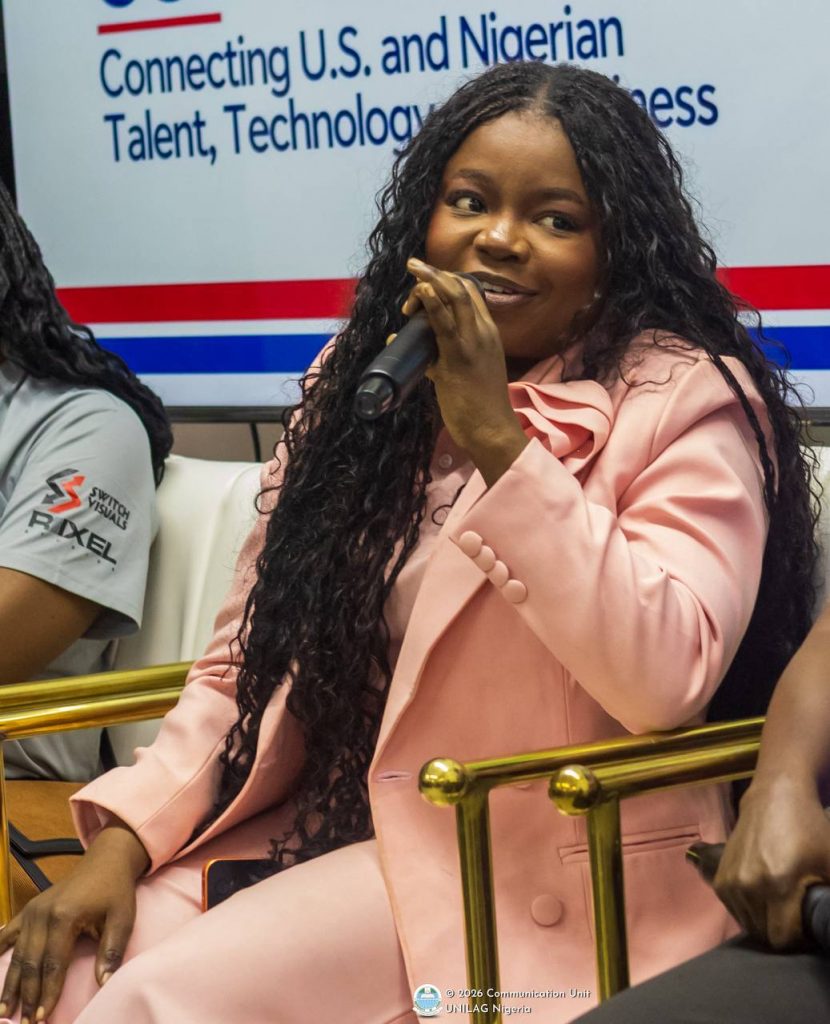
To make Nigeria’s creative sector more attractive to investors, the panellists identified three key priorities: continuous skills development to meet international standards; greater discipline, openness to learning and commitment to professional growth; and deliberate collaboration across complementary areas of expertise, for example, combining studio infrastructure with strong scriptwriting, production or marketing capabilities.
The discussions underscored that Nigeria’s creative economy extends beyond entertainment to encompass technology, intellectual property, entrepreneurship and job creation.
The engagement further underscored the deepening relationship between the University of Lagos and U.S. institutions, while highlighting the shared interest of both countries in leveraging the creative economy as a platform for innovation, cultural exchange, investment and mutual growth.
Report: Lynda Onah
Photograph: Ayo Oloyede